


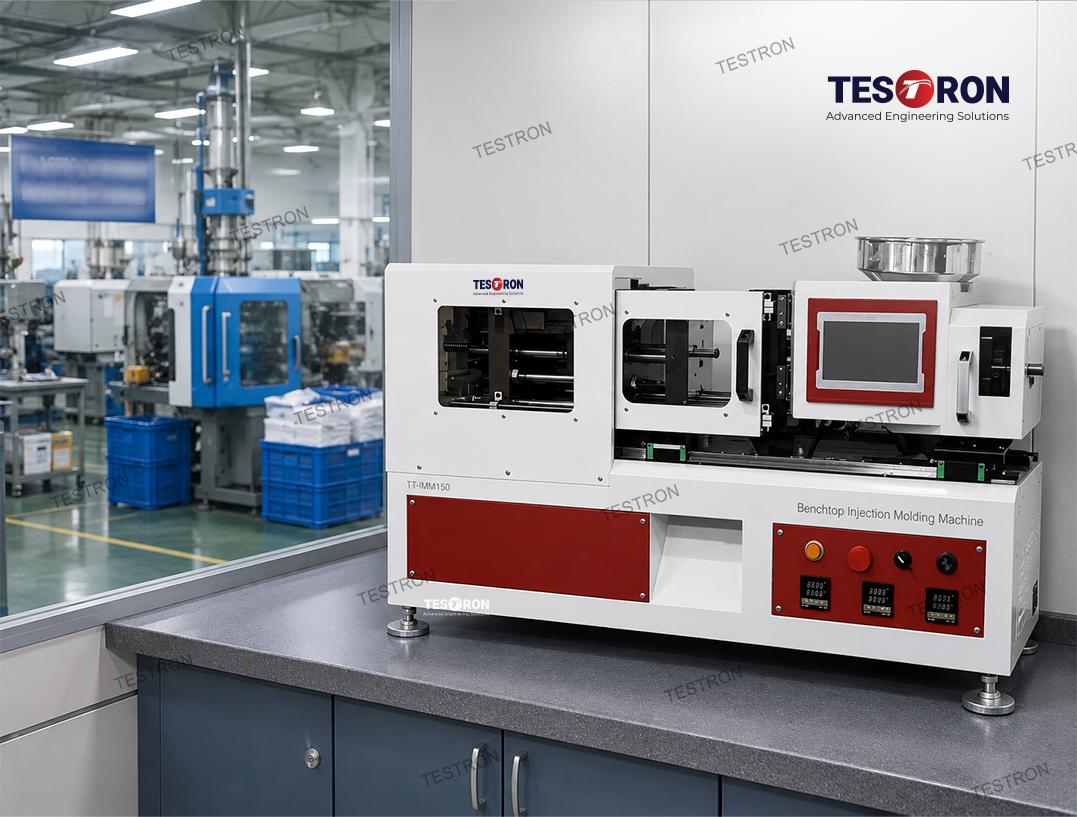
Injection molding equipment specifications differ according to output volume, component size, tooling complexity, and purpose of production. Large companies tend to use industrial injection molding equipment due to high output volumes. However, there are certain cases where small production needs that type of machine.
The Benchtop Injection Molding Machine is the type of equipment that is used for low-production purposes. This equipment takes up less space but gives the accuracy of the process required for tests and small production volumes. The Industrial injection molding machines constitute machines that are used for mass production purposes. This means that it is necessary to define the differences between these machines to select the appropriate type.
What Is a Benchtop Injection Molding Machine?
A Benchtop Plastic Injection Molding Machine is a molding machine used to produce small plastic parts and prototypes. This machine is equally applicable in the evaluation of molds before the mass production process. The small size of this machine makes it suitable for use in places such as laboratories, research institutions, technical schools, and development centers.
This machine is usually employed in:
- Prototype development
- Validation of product designs
- Technical training and education
- Research and development
- Low volume production
It is therefore flexible and applicable in situations requiring frequent changes of molds.
What Is an Industrial Injection Molding Machine?
Industrial injection molding machines are made for mass production processes. In such processes, machines manufacture plastic parts in high volume and of good quality. Industrial injection molding machines usually provide greater clamping force, greater shot size capacity, an automated material handling system, and a production control system.
They can be used in the manufacturing of:
- Automotive parts
- Consumer goods
- Medical equipment
- Electrical enclosures
- Packaging products
- Industrial plastic parts
Comparing Performance and Applications
Despite employing the same molding concept, there are differences in their performance depending on the production needs.
Production Capacity
Production volume is among the major distinguishing factors between the two machines.
The benchtop machine will be applicable to:
- Prototype production
- Manufacturing of functional samples
- Small volume productions
- Testing products during development
While the industrial machine will be used in:
- Continuous production
- High volume productions
- Use of multi-cavity molds
- Automated production lines
Industries that produce thousands of identical components daily would find the industrial machines more favorable than the benchtop machines.
Machine Size and Installation Requirements
Machine size is an important consideration in relation to installation, infrastructure, and operation costs.
Benchtop machines normally have the following characteristics:
- Compact footprints
- Low energy use
- Easy to install
- Less space needed for work
Industrial machines generally need:
- Specific production area
- Higher electricity capacity
- Material handling systems
- Automation equipment
- Greater maintenance facilities
These factors become highly significant in university and laboratory settings.
Tooling Flexibility and Material Testing
Another great advantage associated with the use of the Benchtop Injection Mold Machine is flexibility, which allows engineers to change tools rapidly and conduct experiments without interrupting ongoing production processes.
New molds can be analyzed, optimal processing conditions determined, and prototypes created quickly by the engineers. Additionally, the best Benchtop Injection Molding Machine is perfectly compatible with other material test equipment, and samples prepared on it can be analyzed in terms of various physical properties prior to large-scale production.
When assessing the features of a Benchtop Injection Molding Machine, following recognized industry standards guarantees that the conducted material tests and produced companies are reliable, consistent, and accurate. ASTM International D3641 Standard Practice for Injection Molding Test Specimens contains comprehensive instructions on how to prepare a uniform test specimen made of thermoplastic material. The engineers who apply these practices can measure various physical properties such as tensile strength, impact resistance, and dimensional stability before starting mass production.
Upon adoption of this standard, in the research process, the ability to sustain the validity of product development is achieved; thus, there will be a decrease in variance between consequent patent series, and actual data will be used for decision-making processes.
Factors to Consider Before Choosing a Machine
Your necessities, the resources you have, and the goals of creating the product will determine the selection of equipment.
Define Your Production Objectives
The first step is to identify how the machine will be used.
The Benchtop Injection Molder is best used for:
- Prototyping
- Validation of product designs
- Research and development
- Laboratories
- Small-scale production
Industrial machines will be best used for:
- Continuous production
- High volume production
- Automated production
- Multiple shifts
Choosing equipment that matches your production objectives helps improve efficiency while avoiding unnecessary investment.
Consider Investment Beyond the Purchase Price
The purchase price is not the whole picture when it comes to investing.
When assessing the Benchtop Injection Molding Machine price, one must consider the overall cost of the Benchtop Injection Molding Machine. Thus, factors like operating costs, service costs, electricity costs, replacement costs, and lifespan must be included.
Evaluate Equipment Quality and Technical Support
Quality is a key component that helps the machinery to be effective. Accurate machining, reliable injection system, high-precision temperature regulation, and survivability are all crucial for the effective operation of any manufacturing process.
Using the services of a professional Benchtop Injection Molding Machine manufacturer allows for machinery specifically tailored for laboratory tests and prototype production purposes. Choosing a reputable provider of these molding machines also allows getting technical assistance and spare parts.
Choose the Right Machine for Your Manufacturing Goals
The decision to choose either a benchtop or an industrial injection molding machine will be based on your production volume, the needs of your application, the size of the space available, and manufacturing plans for the future. Though industrial injection molding machines may be the perfect choice for mass production, benchtop machines offer more versatility and accuracy required for product development and small-batch production.
If the goal of your business lies in product development or mold design validation, or any other similar applications, then looking into an advanced Benchtop Injection Molding Machine supplier can help identify equipment that aligns with your technical and manufacturing goals.
