


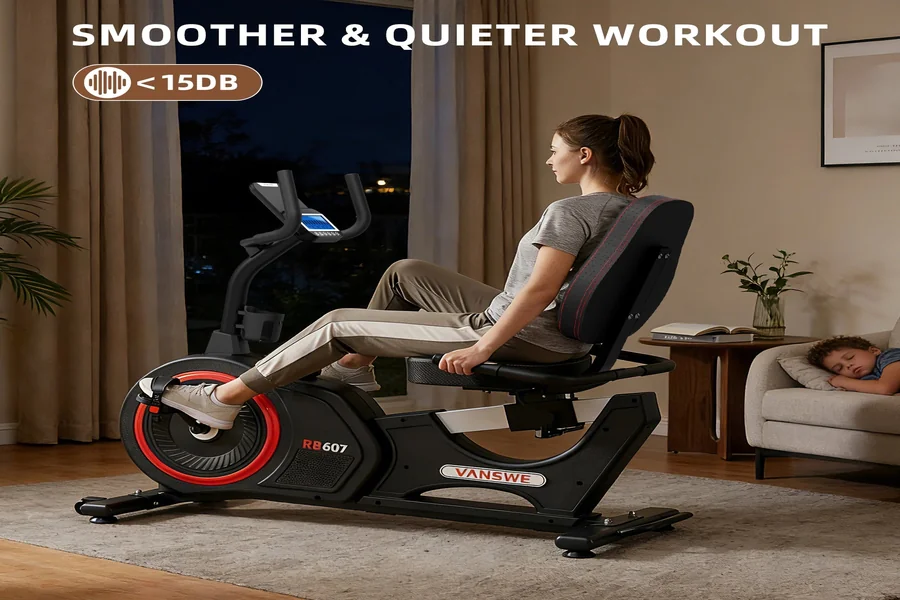
You want to move more. Your back hurts. Your knees bother you. You worry about falling. These worries stop many people from working out. A recumbent bike fixes these problems.
This comfy machine gives great health benefits. You get easy cardio that is gentle on your body. The seat supports your back. Your muscles get stronger. The design keeps you safe.
What is a recumbent bike good for? These benefits help older adults, beginners, and people healing from injuries. Recumbent bikes make fitness feel welcoming. You can work out without being afraid. Recumbent bikes let you start small. Your health gets better with every pedal you push.
Key Takeaways
- Recumbent bikes give you low-impact cardio that strengthens your heart without putting stress on your joints.
- The cushioned seat and backrest support your back and ease pain, so you can exercise in comfort.
- Riding a recumbent bike often can help you burn calories and make your leg muscles stronger.
- Recumbent bikes are safe and helpful for older adults, new riders, and people healing from injuries.
- Ride for 30 minutes, five days a week to meet heart health rules and see steady progress.
Low-Impact Cardio and Heart Health
A recumbent bike gives you a safe way to make your heart healthier. This kind of exercise is easy on your body and puts less stress on it. Anyone can use it, no matter how fit they are. You get a good workout without the pain that makes many people quit.
The main benefit is easy to see. You get your heart beating faster. You keep your joints safe. That is why recumbent bikes are a smart pick for older adults, beginners, and people healing from injuries.
How a Recumbent Bike Raises Your Heart Rate Safely
The reclined seat changes the way your body reacts to exercise. Recumbent bikes put less demand on your blood flow. Your heart does not have to pump as hard against gravity. Your heart rate stays lower than it would on an upright bike. This makes exercise feel easier.
You still hit your target zone. For older adults, the goal is 50 to 70 percent of your top heart rate. A 70-year-old has a top rate of 150 beats per minute. Their target range is 75 to 105 beats per minute. You can reach this range with ease on a recumbent bike.
This safety feature guards your heart health. This heart exercise makes your heart muscle stronger. You get good heart training without risky spikes. Your endurance grows over time. The recumbent exercise bike helps you make this progress.
Using it often brings real heart benefits. Recumbent bikes let you ride longer than upright bikes. The support lets you ride for 30 to 60 minutes. Your heart health gets better with every ride.
Less Joint Strain, More Consistent Workouts
Joint pain stops many people from working out. Walking puts stress on your knees and hips. Each step sends a jolt through your bones. This causes pain over time, especially if you have arthritis. A recumbent bike is a low-impact exercise that skips this problem.
The gentle nature of the exercise protects your joints. Your knees and hips feel very little stress. The smooth pedaling keeps your movement soft. The low-impact motion lowers your chance of injury.
The seat gives you key support. It holds your hips steady while you exercise. This steadiness helps if you have injuries. This design supports your lower body. You move without banging your joints.
Your knees gain the most. On an upright bike, knee bending reaches 75 to 105 degrees. This puts high pressure on your kneecap. On a recumbent bike, the knee angle stays between 45 and 70 degrees. This lowers pressure and protects cartilage. Research shows recumbent cycling lowers stress on the anterior cruciate ligament.
This low-impact joint protection matters for your health over time. You exercise without fear of pain. This low-impact joint protection helps you keep your routine. Studies show comfort leads to higher adherence rates. People stay with recumbent bikes longer.
Sticking with it is the key to progress. You cannot make your heart and strength better if you stop early. This bike helps you keep going. Your endurance gets better little by little.
The low-impact nature of the exercise makes this happen. You get fitness gains without joint damage. This low-impact workout protects your body. It gives you good heart training that respects your limits. You build heart fitness safely. You protect your joints. You build a steady habit.
Your heart gets stronger with every push of the pedal.
What Is a Recumbent Bike Good For
To understand what is a recumbent bike good for, you must look at its design. This machine gives you support you feel right away. Your back relaxes. Your joints feel safe. You can exercise without fear.
Back and Joint Support You Can Feel
The seat changes everything. A recumbent bike has a large, padded seat with a full backrest. This backrest supports your lower back. Your back muscles do not have to work hard. They can relax. This design offers superior back and joint support.
The reclined position encourages healthy spinal alignment. It can open up space for nerve roots. This helps if you have herniated discs or spinal stenosis. The backrest keeps your spine in a natural curve. You do not slouch. You do not lean forward.
The pedals sit in front of your body. This changes the angle of your hips and knees. Your weight distributes evenly across the seat. You feel less pressure on your lower back and joints. A clinical trial studied 50 adults over 8 weeks. They found less pain, better endurance, and improved walking.
This bike also improves circulation. More oxygen and nutrients reach your spine and muscles. This improved circulation helps your spine heal between workouts. Your body heals faster. The smooth motion keeps your workout gentle. You get low-impact joint protection with every ride.
The ergonomic design supports proper body alignment. It reduces strain on your muscles and joints. The adjustable seat lets you find the perfect leg extension. Your knees and hips stay safe. This is a true joint-friendly fitness solution.
The large backrest does more than support your back. It lets you sit in a natural position. Your shoulders relax. Your neck stays loose. Your hips sit at a comfortable angle. The pedals sit forward, not below. Your knees bend at a safer angle. Your hips do not bear your full weight. The seat distributes weight evenly. This reduces pressure points on your body.
When people ask what is a recumbent bike good for, the answer starts with this support. A recumbent bike gives you comfort that upright bikes cannot match. A recumbent bike lets you ride longer without pain.
Who Benefits Most
Many people find relief with this machine. You benefit most if you deal with joint pain. This includes knee, hip, and ankle pain. People with back and knee pain also see great results. This machine directly addresses joint pain. These benefits extend to anyone with chronic pain.
Seniors gain a lot from recumbent bikes. The seated design removes the fear of falling. You feel stable and secure. The enhanced safety and stability gives you confidence. You can focus on your workout. People with chronic conditions find recumbent bikes helpful. Many users prefer recumbent bikes for their comfort. You can exercise at your own pace without worry.
People with arthritis find relief. Osteoarthritis of the neck or knees does not stop you. The low-impact motion lets you exercise without aggravating affected areas. You can keep moving without pain. Your joints stay flexible. Your muscles stay active.
Post-surgical patients use this bike for recovery. Hip and knee replacement patients benefit greatly. The pedals sit in front. This prevents the new joint from bending or twisting. You can start with backward pedaling. This warms up your joints gently. You can gradually increase time and resistance. During early recovery, you may only ride for a short time at a time. This is normal. Your body adapts gradually. Recovery takes time, and this bike supports that process.
People with balance impairments also benefit. You do not need to balance. The stable design keeps you safe. People with neurological disorders use it for rehabilitation. The bike supports your body while you rebuild strength. You build confidence with every session.
Anyone with a loss of mobility can start here. You move at your own pace. The bike supports your body. You build strength and confidence. That answers what is a recumbent bike good for — giving everyone a way to exercise safely. Now you know what is a recumbent bike good for in daily life. It changes how you move and heal.
Recumbent Bike Benefits for Weight Loss and Toning
Calories Burned and Fat Loss Potential
You burn calories on a recumbent bike. A person who weighs 125 pounds burns about 170 calories in 30 minutes at a medium pace. A 155-pound person burns about 210 calories. A 185-pound person burns about 252 calories. These numbers come from steady cycling at a comfortable speed.
Sticking with it helps you lose fat more than trying hard. Your body burns fat best during longer, medium-effort sessions. The American Heart Association says moderate means 60 to 70 percent of your top heart rate. Find that number by subtracting your age from 220. A recumbent bike makes it easy to stay in this zone for 45 to 60 minutes. Upright bikes often cause back pain or seat discomfort that cuts your workout short. The comfort of recumbent bikes lets you ride longer. Longer rides mean you burn more total calories. One rider named Anna started with 10 minutes after knee surgery. She built up to 45 minutes a day and lost 25 pounds over 6 months. Her story shows that recumbent bike benefits for weight loss come from steady, comfortable effort.
Muscles Worked
Your lower body does most of the work on a recumbent bike. The quadriceps on the front of your thighs straighten your knee when you push. Your hamstrings on the back of your thighs bend your knee and guide it back. Your glutes help push your hip forward as you move the pedal. Your calves steady your ankle and send power through your foot. The tibialis anterior on the front of your shin puts your foot in place as the pedal comes back up.
Recumbent bikes focus on these muscles more than upright bikes. Your upper body stays still because the backrest holds your torso. This focus makes recumbent bike training a good cardio and strength workout for your legs. The ergonomic seat cuts down muscle tiredness. You can ride longer without pain. That extra time gives you better muscle tone and burns more calories. The low-impact design protects your joints as your muscles get stronger.
Benefits of Using a Recumbent Bike vs. an Upright Bike
Key Differences and Which Fits You
The benefits of using a recumbent bike versus an upright bike come down to posture, comfort, and joint impact. On a recumbent bike, your hips and knees are at about the same height. Your legs push forward and back in a shallow arc. This setup lowers the shear force on your knee joint. A wide cushioned seat with a full backrest takes away pressure on your sit bones and lower spine. You can ride longer without getting tired.
An upright bike is a different story. You balance your torso over a narrow saddle. Your core has to steady every pedal stroke. This puts pressure on your wrists, shoulders, and lower back. That discomfort can make you quit early. A recumbent bike lets you push hard for 45 minutes. An upright session might end after 15 minutes because of back ache.
Aerobic exercise reduces the risk of conditions including heart disease, high blood pressure, type 2 diabetes, metabolic syndrome, and stroke regardless of the equipment used. A recumbent bike ridden at moderate-to-vigorous effort delivers a genuine cardiovascular stimulus. The difference compared to an indoor cycling bike is comfort and training format, not whether real results are possible.
| Aspect | Recumbent Bike | Upright Bike |
| Cardiovascular benefit | Provides cardiovascular benefits and improves cardiovascular fitness | Provides cardiovascular benefits and improves cardiovascular fitness |
| Workout intensity | Lower intensity; burns fewer calories during high-intensity workouts | Higher intensity; more challenging workout and burns more calories in less time |
| Muscle engagement | Primarily lower body (quadriceps, hamstrings, glutes, calves) | Lower body plus core, lower back, shoulders, arms, and chest for fuller engagement |
| Joint impact | More forgiving platform; less stress on knees and hips | More stress on knees and hips due to vertical posture and weight distribution |
| Best suited for | Riders managing joint discomfort, recovering from injury, or wanting longer sessions without physical wear | Those seeking a more intense workout, higher calorie burn, and a cardio challenge for both lower and upper body |
Choose a recumbent bike if you have back, hip, or knee pain. Pick one if you are recovering from surgery or have balance issues. Your main goal might be steady, long cardio. You might want to read or watch something while you ride. An upright bike fits short, high-intensity intervals. It works for anyone who wants to copy outdoor road cycling.
How Long and How Often to Ride
The American Heart Association recommends 30 minutes per session, five days per week. That adds up to 150 minutes total each week. The American College of Sports Medicine suggests 20 to 60 minutes per session, spread through the week. For beginners, aim for four to five 30- to 60-minute rides a week. This builds your base and starts results.
Start with 10 minutes if you need to. Add a few minutes each week. Your body gets used to it over time. Recumbent bike workouts feel gentle on your joints. This low-impact design keeps you consistent. Consistency matters more than intensity. Small steps lead to better health.
A recumbent bike gives you gentle cardio, strong back support, and safe muscle toning. These benefits make exercise feel easy and kind to your body. Recumbent bikes keep you comfortable, so you ride longer and stay consistent.
Try a recumbent bike at your local gym this week. Talk to your doctor first if you have health concerns. Small steps add up. Every pedal you push brings better health. Recumbent bikes welcome you at any age or fitness level. Start today, and let each ride build a stronger, happier you.
FAQ
Is a recumbent bike good for back pain?
Yes. The large padded seat and full backrest support your lower back. Your back muscles relax during the ride. The reclined position encourages healthy spinal alignment. A clinical trial found less pain and better endurance after 8 weeks. This makes a recumbent bike a smart choice for back pain sufferers.
Can seniors use a recumbent bike safely?
Absolutely. The seated design removes the fear of falling. You feel stable and secure on the wide seat. The step-through frame makes mounting easy. You can exercise at your own pace without worry. Many seniors prefer recumbent bikes for their comfort and safety.
How many calories can you burn?
A 125-pound person burns about 170 calories in 30 minutes at a medium pace. A 155-pound person burns about 210 calories. A 185-pound person burns about 252 calories. Longer sessions burn more total calories. Recumbent bikes let you ride longer without discomfort.
What muscles do recumbent bikes work?
Your lower body does most of the work. The quadriceps straighten your knee when you push. Your hamstrings bend your knee and guide it back. Your glutes push your hip forward. Your calves steady your ankle. Recumbent bikes focus on these muscles more than upright bikes.
How often should you ride?
The American Heart Association recommends 30 minutes per session, five days per week. That adds up to 150 minutes each week. Start with 10 minutes if you need to. Add a few minutes each week. Consistency matters more than intensity.
