


Table of Contents
- Introduction to Digital Dentures
- Advantages Over Traditional Methods
- Technological Advancements in Digital Dentures
- Impact on Patient Care
- Future Trends in Digital Dentistry
- Conclusion
In recent years, technological advancements in dentistry have dramatically changed how dental prostheses are designed and fabricated. Digital Dentures are at the forefront of this transformation, leveraging digital techniques to deliver unmatched accuracy and efficiency. This innovation not only enhances the experience of dental professionals but also leads to improved patient outcomes, making it a significant development in prosthodontics.
Traditional denture methods required labor-intensive steps and could result in multiple patient visits to achieve the desired fit and comfort. With digital denture technology, practitioners are able to streamline processes, minimize errors, and provide patients with customized prosthetics tailored to their exact anatomical needs. The combination of digital design and manufacturing methods signifies a shift towards precision and patient-centered care.
As more dental clinics adopt these advanced workflows, more individuals stand to gain from quicker appointments and higher-quality prosthetics. Patients who once endured lengthy waits and uncomfortable fittings now enjoy a modern approach that prioritizes their time and oral health. This shift not only benefits patients directly but also allows practices to serve communities more efficiently through predictable results.
Practices like North Orange Family Dentistry are embracing these innovative processes, helping to set new standards in dental prosthetic care. The future of dentistry is unfolding rapidly, and the integration of digital denture solutions marks a pivotal moment in the evolution of oral healthcare.
Introduction to Digital Dentures
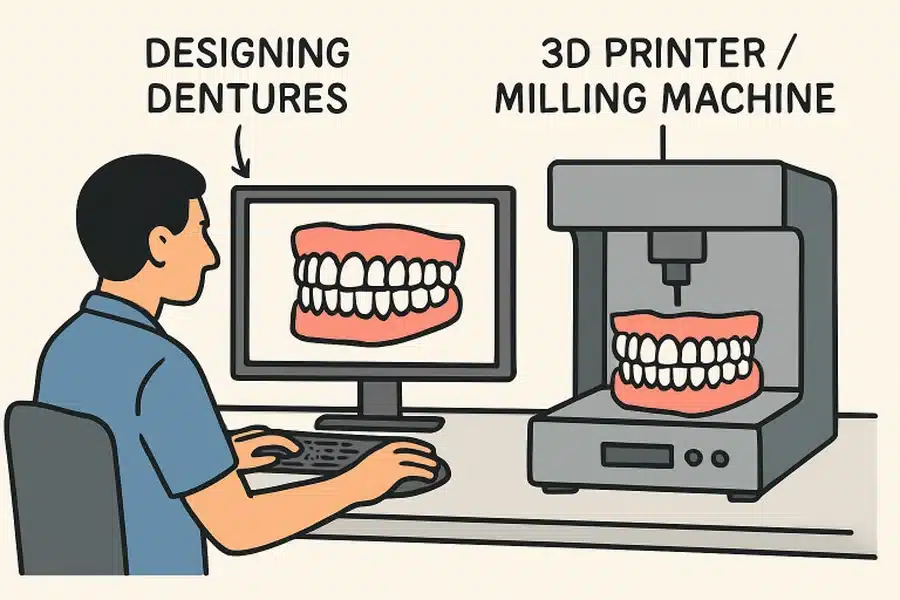
Digital dentures utilize sophisticated computer-aided design (CAD) and computer-aided manufacturing (CAM) systems to create precise dental prosthetics. These technologies enable dentists to scan a patient’s oral structure digitally, design dentures in software, and fabricate them using advanced milling or 3D printing techniques. This process drastically reduces the number of manual steps required and ensures each prosthetic matches the patient’s unique anatomy.
While traditional molds and impressions may be prone to inaccuracies, digital techniques capture every detail, offering an exceptional standard of care for those in need of full or partial dentures. The transition from analog to digital workflows means far less guesswork, allowing for a more predictable and reproducible result every time.
Advantages Over Traditional Methods
The comparison between conventional and digital dentures illustrates several critical benefits provided by digital workflows:
- Precision: Digital scanning and design allow for highly accurate impressions, reducing the risk of ill-fitting dentures and post-insertion adjustments.
- Efficiency: Eliminating many manual fabrication steps shortens turnaround times for both clinics and patients.
- Customization: Dentists can evaluate and modify digital models easily, ensuring the prosthetic is tailored to a patient’s specific anatomy, bite, and esthetic preferences.
Switching to digital methods reduces not only appointment frequency but also the discomfort sometimes associated with traditional impression materials. This efficiency is both a time-saver for practitioners and a relief for patients.
Technological Advancements in Digital Dentures
Leading-edge developments continue to enrich this field. Multi-material 3D printing, such as that found in the NextDent Jetted Denture Solution, has made it possible to fabricate highly durable and aesthetically pleasing dentures in a single build. This innovation allows for seamless integration of gum, tooth, and base materials, enhancing both function and appearance.
Artificial intelligence has emerged as another powerful tool. AI-powered design software helps dentists predict fit, occlusion, and overall comfort, improving outcomes. By analyzing vast data sets, AI can optimize parameters that might otherwise be missed during manual design.
Impact on Patient Care
Digital dentures are changing how patients experience prosthodontic care. Among the most notable impacts are reduced chair time and faster production, which means fewer appointments and less disruption for busy individuals. The increased precision of digital models results in a more comfortable and tailored fit, minimizing sore spots and the need for repeated adjustments.
- Reduced Chair Time: Digital workflows shorten the time required from initial consultation to final delivery.
- Improved Comfort: Closely fitting dentures reduce irritation and movement, significantly increasing comfort for wearers.
- Enhanced Aesthetics: Advanced design tools allow dentists to replicate natural tooth shapes and tissue contours with remarkable realism.
This shift in care dynamics aligns with a growing demand for patient-centered experiences in all areas of healthcare. By incorporating digital solutions, dental practices can meet and exceed these expectations.
Future Trends in Digital Dentistry
The future of prosthodontics is deeply rooted in digital integration. One exciting trend is the merging of digital dentures with dental implant planning. This fusion allows for comprehensive treatment strategies, improving functional and esthetic results for patients requiring combined services. Another development is the use of augmented reality for patient education, where individuals can visualize their treatment outcomes before any procedures begin.
Digital denture adoption is growing rapidly worldwide, especially in emerging markets where access to premium dental care is expanding. According to Forbes, investments in digital dental technologies are expected to increase significantly over the next decade, making advanced care more widely available across diverse populations.
Conclusion
Digital denture technology is revolutionizing prosthodontics by delivering improved fits, faster turnaround, and greater patient satisfaction than ever before. As practices like North Orange Family Dentistry and dental professionals worldwide embrace these techniques, the profession continues to move toward a future defined by precision, efficiency, and individualized patient care. With ongoing advancements, digital dentures are poised to become the new gold standard in restorative dentistry, ensuring that practitioners and patients alike benefit from the best innovation has to offer.
