


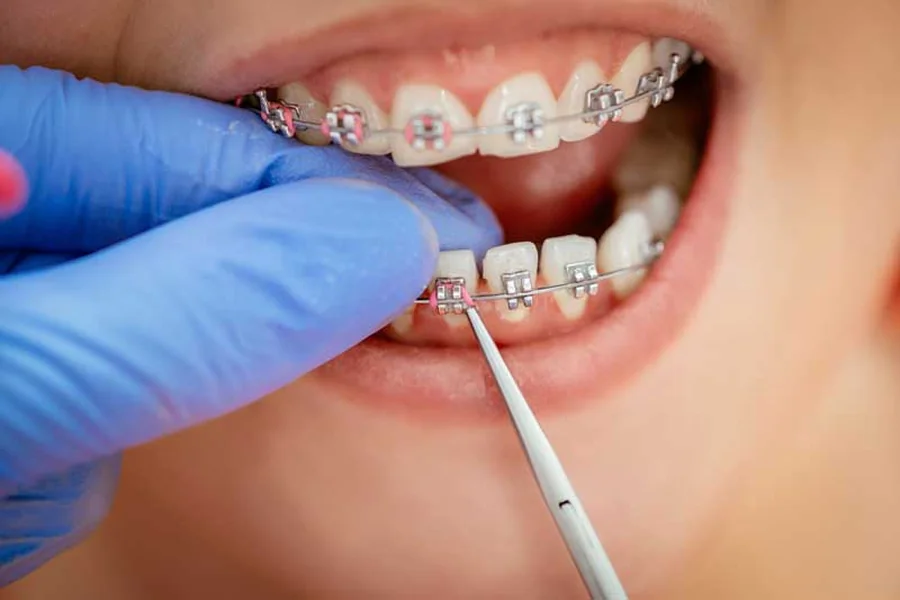
Modern orthodontic treatment barely resembles what your parents went through, and that’s a good thing. The wires, brackets, and elastics that moved teeth in the 1990s are now museum pieces in a technical sense, replaced by materials and methods that cut treatment time nearly in half for many patients. If you’re shopping for an orthodontist in south riding va, understanding how the technology evolved helps you ask smarter questions before committing thousands of dollars and months of your life to a treatment plan.
The Crude Beginnings of Tooth Movement
People have tried to straighten teeth for thousands of years, and the early attempts were brutal. Archaeologists have found catgut wrapped around teeth in ancient Egyptian mummies, and Roman tombs contained gold wire fixtures designed to close gaps. The results were unpredictable, painful, and frequently caused more harm than good.
It wasn’t until 1728 that a French dentist named Pierre Fauchard documented a systematic approach to tooth alignment. He used a flat metal strip called a bandeau, which was shaped to the arch and tied to the teeth with thread. The device could apply gentle pressure, but keeping it anchored was nearly impossible. His student, Etienne Bourdet, refined the approach and became the first dentist to extract teeth specifically to relieve crowding before aligning the rest.
The 1800s brought what you might recognize as actual braces. Gold, silver, and even wood were fashioned into wires and plates. One notable figure, a dentist named Norman Kingsley, published a treatise in 1880 that covered methods for correcting irregular teeth. Around the same time, a dentist named John Nutting Farrar wrote two volumes on the subject of tooth movement, and he’s credited with being among the first to argue that teeth could be moved safely through controlled force applied over time. He tested this on himself, which tells you something about the pain tolerance of nineteenth-century dentists.
Edward Angle and the Birth of Modern Orthodontics
If you’ve heard one name in orthodontic history, it’s Edward Angle, and his influence is still baked into how treatment is delivered today. In the 1890s, Angle established the first formal orthodontic training program and founded the American Society of Orthodontists, which grew into the American Association of Orthodontists you see referenced everywhere now. He also invented the ribbon arch bracket system in 1928, which was the first design to use a bracket that locked the wire in place rather than relying on ligatures tied around the tooth.
Angle’s philosophy was that you should move all teeth to a predetermined ideal position, which meant massive tooth movement and frequent extractions. His methods worked, but they were slow and relied heavily on the skill of the individual practitioner. You couldn’t simply follow a manual and get good results. This is why orthodontics remained a niche specialty for decades, practiced primarily by a small group of dentists who had studied under Angle or his protégés.
One interesting aside from this era involves the composer Georges Bizet, who wrote the opera Carmen. His dentist, a man named Charles Godon, developed an early hinged expansion appliance that Bizet reportedly wore while composing. There’s no record of whether it helped his bite, but it didn’t seem to hurt his output, and it shows that even creative types were dealing with dental hardware in the late 1800s.
The Stainless Steel Revolution
World War II changed orthodontics in a way nobody predicted. The military’s demand for corrosion-resistant metals drove massive research into stainless steel alloys, and after the war, orthodontists started using the same materials in their practices. Stainless steel brackets and wires replaced gold and silver almost overnight because they were cheaper, stronger, and could be manufactured to precise tolerances.
This era also produced the first standardized bracket prescription system. In the 1970s, a dentist named Lawrence Andrews analyzed thousands of untreated patients with naturally perfect bites and published his findings in the American Journal of Orthodontics. He documented the average angle and position of every tooth surface, then created a bracket system that would automatically position the wire at those exact angles. This meant practitioners no longer had to bend custom wires for every patient, and the field started moving toward the modern straight-wire technique that’s still the standard of care.
The 1980s introduced two materials that changed the patient experience. First, nickel-titanium wires, developed by a naval ordnance lab researcher named William Buehler, brought shape memory and superelasticity to orthodontics. These wires could apply continuous light force over long distances, which meant fewer adjustments and faster tooth movement. Second, ceramic brackets arrived, giving you the option of tooth-colored brackets that bled into your smile instead of flashing metal every time you opened your mouth.
How the Technology Actually Works Today
Your modern treatment plan uses a combination of old principles and new tools. The bracket positioning system Andrews developed in the 1970s is still the foundation, but it’s now executed with digital precision. Here’s what that means in practice:
- Your orthodontist takes a cone beam CT scan or an intraoral digital impression, which produces a 3D model of your teeth and roots accurate to within 50 microns. For comparison, a human hair is about 100 microns thick.
- That digital model goes into treatment planning software, where the final tooth positions are calculated before a single bracket goes on.
- Custom brackets can be manufactured to fit your specific tooth anatomy, and they can include torque prescriptions that override the standard values Andrews published.
- Wires are still bent by hand in some cases, but increasingly they’re shaped by robotic bending machines that follow the digital plan.
The shift from analog to digital isn’t cosmetic. A 2019 study published in the journal Orthodontics and Craniofacial Research compared treatment outcomes between patients treated with digital custom appliances and those treated with conventional brackets. The researchers found that the custom group required significantly fewer visits and spent less total time in treatment. You’re not just getting a shinier experience; you’re getting a faster and more predictable one.
Clear Aligners and the Marketplace Shift
Invisalign launched in 1999 and fundamentally changed the economics of orthodontics. For the first time, you could straighten teeth without brackets or wires, using a series of clear plastic trays that you swapped out every week or two. The initial versions had significant limitations, particularly around treating severe crowding and bite issues, but the technology improved rapidly as the company partnered with orthodontists to develop more complex attachment systems.
The broader marketplace has also shifted because of direct-to-consumer aligner brands that emerged around 2017. Companies like SmileDirectClub and Byte offered remote treatment with significantly lower prices, which forced traditional orthodontists to modernize their own offerings. Most practices now offer clear aligner therapy as a core treatment option rather than a novelty, and many have adopted their own remote monitoring systems to reduce the number of in-person visits you need.
This competition has been good for you as a patient. The American Association of Orthodontists published a survey showing that adult patient starts increased every year between 2015 and 2023, reaching over 1.5 million annually. The demographics have shifted from teenagers to adults in their thirties and forties who are seeking treatment for practical reasons like jaw pain, nighttime clenching, and the slow crowding that comes with age, not just aesthetics.
What Costs More and What Costs Less
Here’s the thing about modern orthodontic technology: it’s not uniformly more expensive. The table below breaks down what you can expect financially, based on industry averages reported by the American Dental Association and multiple state dental societies.
| Treatment Type | Typical Duration | Price Range | Key Technology
|
| Traditional metal braces | 18 to 24 months | $3,000 to $7,500 | Straight-wire brackets, nickel-titanium archwires |
| Ceramic braces | 20 to 26 months | $4,000 to $8,000 | Polycrystalline alumina brackets |
| Clear aligners (orthodontist-led) | 12 to 18 months for moderate cases | $3,500 to $8,500 | 3D printed sequential trays |
| Lingual braces | 18 to 30 months | $8,000 to $13,000 | Custom-milled gold brackets bonded to back of teeth |
| Remote aligner programs | 4 to 10 months for mild cases | $1,500 to $3,000 | Aligner with no in-person monitoring |
What you’re paying for isn’t the hardware itself, since the materials cost under a few hundred dollars per patient. You’re paying for the orthodontist’s diagnostic judgment, the treatment planning software license, the sterilization protocols, and the liability insurance that protects you if something goes wrong. A crooked tooth that doesn’t move correctly can take years to fix with additional treatment, so the margin between running your case off a template and running it off a comprehensive diagnosis is where you actually spend your money.
Asking the Right Questions at Your Consultation
You should walk into a consultation with specific technical questions, not vague ones about whether braces hurt. Here’s a practical set that will help you compare practices fairly:
What type of CT scan do you use for treatment planning? Some offices still rely on 2D x-rays, which cannot assess root position or bone thickness. Cone beam CT scans give you three-dimensional data and are considered the standard for complex cases. You can confirm the technology exists before you book by checking the ADA’s standards for radiographic imaging.
Are your retainers custom-fabricated from my final scan or are they generic press-and-fold trays? This matters because a custom retainer holds your teeth in exactly the right position, while a generic one just approximates the arch shape. The retention phase is where most orthodontic relapse happens, and a poorly fitted retainer is the most common cause.
How do you handle emergency appointments, and what’s your policy for broken brackets or lost aligners? Orthodontists with modern patient portals can often troubleshoot remotely, and some offices have same-day emergency slots reserved. You don’t want to find out after a bracket pops off that the office only accepts emergencies on Tuesday mornings.
Do you use self-ligating brackets or traditional elastic ligatures? Self-ligating brackets have a built-in door that holds the wire, which reduces friction and lets you go longer between adjustments. They’re slightly more expensive, but they also mean fewer office visits for most patients. The American Journal of Orthodontics and Dentofacial Orthopedics published a meta-analysis in 2021 comparing the two systems and found self-ligating brackets reduced treatment time by roughly four months on average without increasing the rate of complications.
One more thing to ask about is the retention plan after treatment ends. Ask specifically whether the retainer fee is included in the treatment cost or billed separately. These fees can range anywhere from $300 to $900, and plenty of patients get surprised at the end of a successful treatment when they find out the final retainers weren’t covered.
What History Teaches About Choosing Now
The braces you put on today use materials and methods that were invented within the last fifty years, and the pace of change isn’t slowing down. The next decade will bring AI-driven treatment planning that predicts tooth movement with higher precision, and probably a continued expansion of remote monitoring tools that let you check in with your orthodontist from your phone.
But the core physics of moving teeth hasn’t changed: you apply sustained light force, the bone remodels around the moving root, and the process takes time. No amount of technology eliminates the need for a trained professional to diagnose what’s actually wrong with your bite and supervise what happens when teeth start migrating. What modern technology does is compress that timeline, reduce the number of mistakes, and give you more options for how the whole experience looks and feels. That’s the real story of orthodontic innovation, and it’s why the conversation at your consultation should be about what the technology means for your specific case, not just what brand name is on the bracket.
