


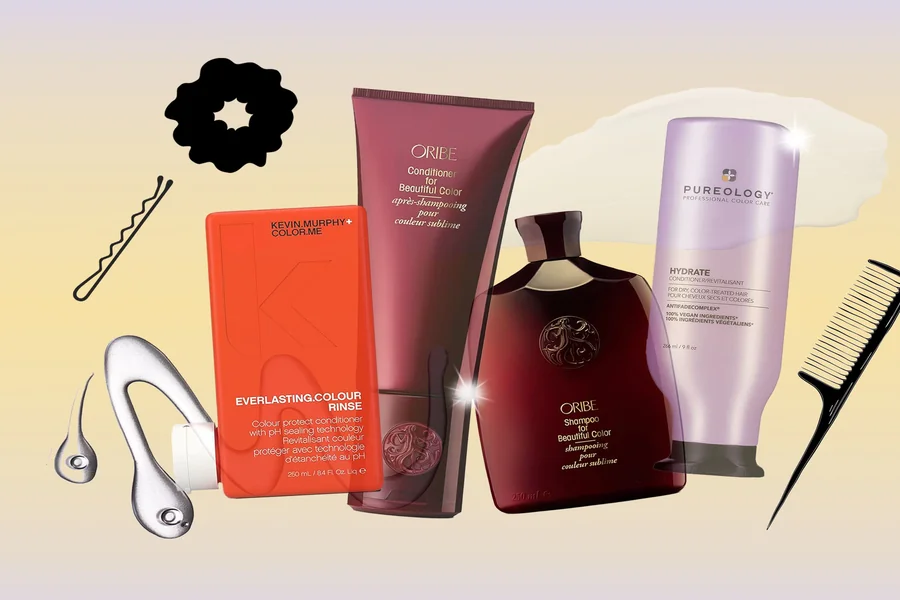
Your flat iron doesn’t care about your color appointment. It has one job, make hair straight, and it will absolutely torch the shade you spent two hours and a significant chunk of your paycheck acquiring if nothing in your routine is standing between the heat and the pigment.
People blame fading on cheap color, sun exposure, washing too often. All valid. But heat styling is the silent accelerator nobody discusses with the urgency it deserves because the tool is already in your hand every morning and nobody wants to hear that the thing making their hair look good today is making their color look worse by Friday. The best shampoo for color treated hair exists partly to deal with this exact problem, and understanding the connection between heat and fade changes how you think about both.
What Heat Is Physically Doing to Color Molecules
Best shampoo for color treated hair Color molecules sit inside the cortex, held there by a cuticle that the coloring process already compromised. That cuticle never fully closes back to its pre-color state. Sits slightly raised. Permanently more porous. Already leaking small amounts of pigment with every wash.
Heat forces the cuticle open further. Color molecules sitting loosely inside an already-porous cortex get an exit route they didn’t have before the tool made contact.
The oxidation piece compounds this. Heat accelerates the same chemical process sunlight causes, just faster and more concentrated. Warm tones drift brassy. Cool tones lose their edge. Vivid colors drop o09intensity within days because heat is running the same fade chemistry at an accelerated rate every single ,morning.
| What Heat Does | What Shows Up in Your Mirror |
| Forces cuticle open past resting position | Color looks duller within days of styling |
| Accelerates oxidative pigment breakdown | Warm tones go brassy faster than expected |
| Evaporates moisture from the cortex | Hair feels dry, color appears flat and chalky |
| Cumulative damage with daily use | Fade accelerates over weeks regardless of products |
| Weakens protein structure holding pigment | Color washes out faster with each successive appointment |
That last row is the one people feel without understanding. Each heat session degrades the protein framework holding color molecules inside the cortex. Over months of daily styling, the shaft becomes progressively less capable of retaining pigment regardless of how careful everything else in the routine is.
Why the Shampoo Became the Most Important Step in the Routine
The best shampoo for color treated hair in a heat styling routine needs to fight on two fronts at once. Protecting whatever pigment survived the heat exposure and repairing structural damage the heat caused so the next wash doesn’t hemorrhage even more color through a cuticle that got worse since yesterday.
That means the formula carries:
- Hydrolyzed proteins patching the cuticle gaps heat created, physically reducing the exit points color molecules use to escape during each wash
- Low pH between 4.5 and 5.5 encouraging the cuticle to close as much as a heat-damaged strand can manage
- UV filters picking up where heat left off, addressing the oxidation that continues between washes courtesy of sunlight
- Panthenol and glycerin replacing moisture heat evaporated from the cortex, because a dehydrated shaft makes color look flat regardless of how much pigment is technically still in there
The best shampoo for color treated hair here isn’t doing damage control after the fact. It’s running triage during the wash on a strand that showed up already compromised and needs intervention before conditioner even enters the conversation.
The Temperature Question People Keep Getting Wrong
Most flat irons and curling wands offer temperature settings between 150 and 230 degrees Celsius. Most people crank them to maximum because higher heat means faster results and faster results mean less time holding a hot tool near your face at seven in the morning.
On color treated hair this math backfires spectacularly. Every degree above 180 increases cuticle lift exponentially rather than linearly. The difference between 180 and 220 degrees isn’t a modest increase in fade risk. It’s a dramatic one. And no best shampoo for color treated hair, however well formulated, can fully compensate for daily passes at maximum temperature because the damage outpaces what a three-minute wash can repair.
Keeping tools below 180 for color treated hair isn’t overcautious advice from someone who doesn’t understand your morning schedule. It’s the temperature ceiling above which shampoo-based repair can no longer keep up with tool-based destruction.
Conclusion
Heat styling and color treated hair coexist in most people’s routines whether that’s ideal or not. The practical question isn’t whether to use heat. It’s whether the rest of the routine, starting with the best shampoo for color treated hair, is equipped to handle what the heat leaves behind.
Protein repair. Cuticle closure. Moisture replacement. Oxidation defense. The shampoo doing all four during every wash is the difference between color that survives a heat styling routine and color that fades so fast the salon appointment feels like a waste of money before the month is over.
