


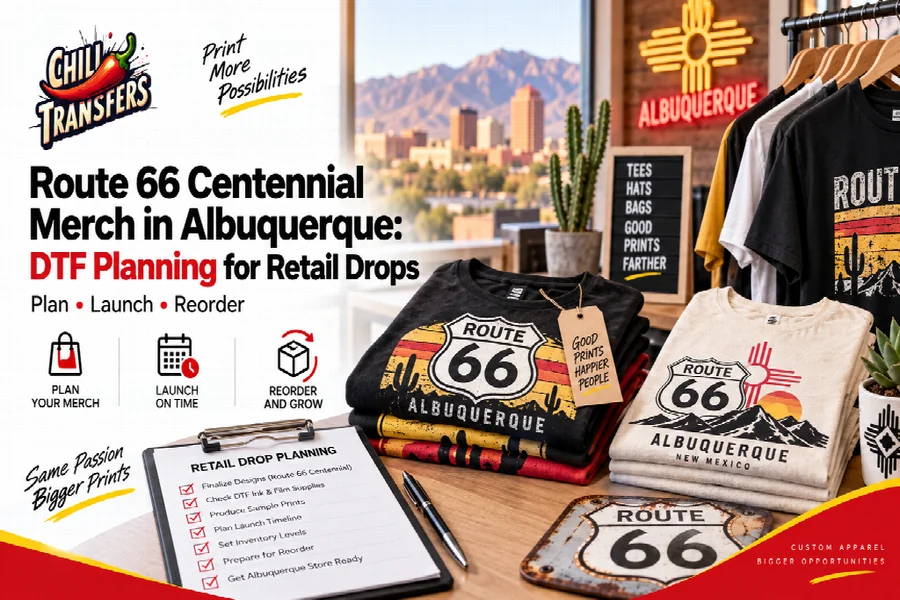
Albuquerque retailers preparing merchandise around the 2026 Route 66 Centennial should plan releases as a sequence of controlled retail drops rather than treating the entire year as one large merchandise order. Official Albuquerque tourism materials make Route 66 a major 2026 visitor theme, which creates a useful planning context for businesses serving travelers, events, neighborhoods, and local customers.
For the broader local production context, the DTF Transfers in Albuquerque local guide explains how transfer ordering can fit into Albuquerque apparel workflows.
Build a Core Line Before Event-Specific Designs
The safest starting point is a small group of designs that can remain relevant across the season. A core line might use original Albuquerque-inspired artwork, a business identity, or another design that is not dependent on one event date.
Event-specific artwork can then sit on top of that foundation. This structure gives a retailer two different inventory decisions: what should remain available throughout the year, and what should exist only for a particular promotion or visitor window.
Keeping those decisions separate reduces the pressure to predict the entire centennial season in one order.
Use Official Centennial Activity as a Calendar Signal
Visit Albuquerque’s 2026 materials emphasize Route 66 experiences, neighborhoods, events, and centennial travel. A retailer does not need to copy the entire tourism calendar into its merchandise plan. The calendar should instead be used as a signal for when visitor interest may concentrate around particular areas or activities.
Create a simple planning sheet with expected sales windows, artwork-lock dates, garment quantities, and reorder checkpoints. The goal is not to forecast exact demand. The goal is to know when a design must be ready for a particular retail opportunity.
Separate Original Artwork From Official Branding
Route 66-inspired merchandise can involve different types of intellectual property. Original artwork created for your business is a different category from an official centennial logo, third-party logo, licensed artwork, or another protected graphic.
If a design uses official or third-party assets, make permission and artwork approval a separate step before production. Do not assume that a logo appearing in tourism promotion is automatically available for commercial merchandise.
This approval step should happen before transfers are ordered, because a finished transfer is not the right place to discover that an artwork file needs to be replaced.
Plan Transfers Separately From Blank Garments
A retail drop has two inventory layers: the graphic and the garment. Treating them as separate planning decisions can make the order easier to control.
For example, a retailer may know which designs are approved before knowing the final size mix of every shirt. Keeping a clear record of transfer quantities and blank-garment quantities makes it easier to see where inventory risk actually sits.
The same logic also helps when one design is intended for several garment colors or when the same blank is used across more than one artwork drop.
Group Approved Designs Without Mixing Their Roles
When several approved graphics are needed in the same production window, gang-sheet planning may help organize them efficiently. The important point is to keep each design’s retail purpose clear.
A core logo, a limited centennial design, an employee shirt graphic, and an event-specific design should not become one undifferentiated artwork pool simply because they fit on the same sheet.
The existing guide to DTF gang sheets for Albuquerque print shops provides additional context for organizing multiple designs without losing track of quantities and production roles.
Use Drop-Level Reorder Points
Do not wait until every design is low before reviewing inventory. Each retail drop should have its own checkpoint based on the remaining transfers, remaining blanks, upcoming selling window, and whether the artwork is still relevant.
A design tied to a short event may not need another run even if it sold well. A core Albuquerque design may justify continued availability after a centennial-specific design is retired.
This prevents a successful seasonal item from automatically becoming permanent inventory without a deliberate decision.
Keep Staff Apparel Separate From Sale Merchandise
Retail employees may also need branded shirts during busy visitor periods. Staff apparel and customer merchandise should remain separate in the artwork and quantity plan.
The same graphic can be used in both contexts if that is intentional, but the order record should still identify which pieces are operational staff apparel and which are retail inventory. That distinction makes it easier to understand what actually sold and what was consumed internally.
Use a Simple Retail-Drop Checklist
- Identify the core designs that can remain relevant across 2026.
- Separate event-limited graphics from evergreen merchandise.
- Confirm permissions before using official or third-party artwork.
- Lock artwork before ordering transfers.
- Track transfer inventory and blank inventory separately.
- Give every retail drop its own reorder checkpoint.
- Keep employee apparel separate from merchandise for sale.
Plan for a Sequence, Not One Giant Centennial Order
The Route 66 Centennial gives Albuquerque retailers a real local reason to review merchandise planning, but it does not require one oversized production commitment. A better approach is to establish a core line, identify event-specific opportunities, clear artwork rights, and release merchandise in controlled stages.
That structure keeps production connected to actual retail windows while leaving room to learn from each drop. The result is a centennial merchandise plan built around timing, artwork control, and inventory visibility instead of a single guess made at the beginning of the season.
