


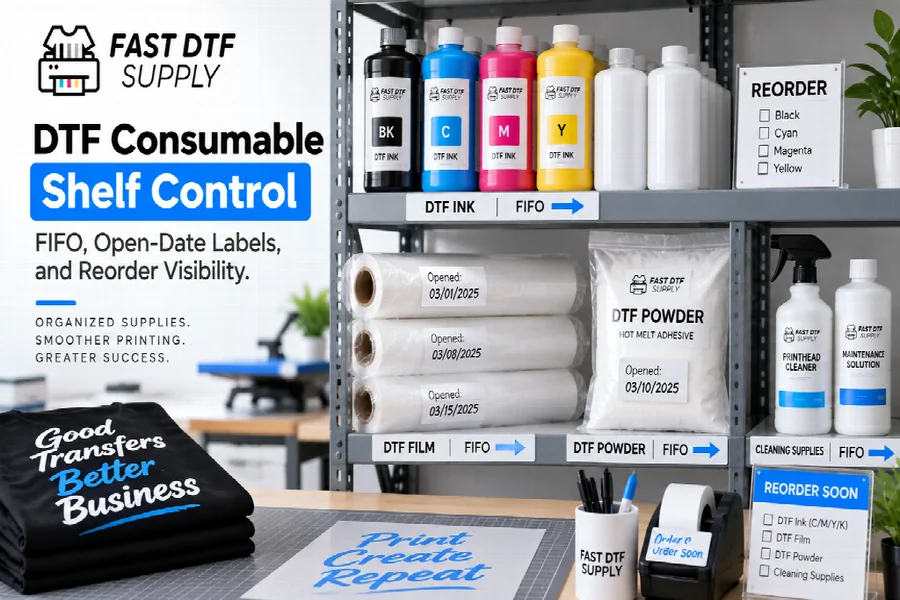
A busy DTF shop can have plenty of supplies and still run out of the item it needs.
The problem is often visibility. Open bottles sit behind sealed ones. Film from different deliveries gets mixed. Powder containers lose their place. Cleaning materials are scattered across several workstations.
A simple shelf-control system makes inventory easier to understand without turning the print shop into a warehouse operation.
Start With One Storage Map
Do not begin with complicated software. First decide where each supply category belongs.
Give ink, film, powder, and maintenance materials their own locations. Keep the arrangement easy to understand at a glance.
If the shop uses a broad range of DTF supplies, group similar items together. Separate opened stock from sealed backup inventory.
The goal is simple. An operator should know where to look without asking another person.
Label the Date Received and Date Opened
Two dates answer different questions.
The received date shows how long an item has been in the shop. The open date shows when the container entered active use.
Add both when they are useful for the product. Keep the original manufacturer label visible. Do not cover lot numbers, expiration information, safety instructions, or storage directions.
Your internal label should add information, not replace the original product label.
Use FIFO Carefully
FIFO means first in, first out. It can help prevent newer stock from being used while older suitable stock remains forgotten.
That rule should not override manufacturer expiration dates or storage instructions. Damaged, contaminated, expired, or unsuitable material should not be used simply because it arrived first.
Think of FIFO as an organization method. Product suitability still comes first.
Separate Open Stock From Backup Stock
This is one of the easiest improvements a shop can make.
Create an “active” location for the container currently in use. Keep unopened backup inventory in a separate area.
This prevents several bottles or powder containers from being opened at the same time without a clear reason. It also makes the remaining sealed inventory easier to count.
The same approach can work for film rolls, sheets, and cleaning supplies.
Track Lot or Batch Information When Available
If a product includes a lot or batch number, keep that information connected to the inventory.
There is no need to build a complex database. A simple record can be enough.
- Product name
- Lot or batch number when provided
- Date received
- Date opened
- Storage location
- Quantity remaining
- Notes about unusual condition or damage
This information becomes useful when a shop needs to understand which material was used during a specific production period.
Create a Visual Reorder Point
A reorder system should tell the team when action is needed before the shelf becomes empty.
Do not choose one universal minimum for every supply. Consumption rates differ. Delivery times can also change.
Instead, review how quickly each item is normally used. Then establish a practical reorder point for that shop.
A simple card, shelf marker, or inventory field can show when stock has reached that point.
Do Not Let Cleaning Supplies Disappear Into Tool Drawers
Maintenance materials are often treated differently from production consumables. That can create a problem when printer care is suddenly needed.
Keep routine DTF cleaning supplies in a defined location. Separate sealed backup stock from materials already assigned to a maintenance station.
This makes it easier to see whether the shop has enough supplies before planned maintenance begins.
Perform a Short Weekly Shelf Review
Inventory control does not need a long meeting.
Once a week, scan the storage area. Check open stock, sealed stock, reorder points, damaged packaging, and materials that may be sitting in the wrong place.
Correct small problems immediately. Move misplaced items. Update quantities when needed. Remove empty containers from the active shelf.
A five-minute routine can prevent a much longer search during production.
Keep Purchasing and Production Using the Same Names
Inventory becomes confusing when the production team uses one name and purchasing uses another.
Use the product name or SKU consistently when possible. Avoid vague labels such as “white bottle,” “big film,” or “regular powder.”
This is especially important when the shop uses several sizes or versions of a similar product.
Make the Shelf Tell the Story
Good inventory control should be visible without a long explanation.
The operator should see what is open, what is backup stock, and what needs to be reordered. Purchasing should be able to confirm quantities without searching through several rooms.
DTF shops do not need complicated inventory systems to improve supply control. A clear storage map, open-date labels, sensible FIFO, and visible reorder points can remove a surprising amount of uncertainty.
The purpose is not to hold more inventory. It is to understand the inventory already on the shelf and know when the next purchase needs to happen.
