



Anyone who has spent time inside a trading firm’s operations team knows the uncomfortable truth: the systems that move markets in milliseconds often sit on top of a back office that still runs on spreadsheets, email chains, and manual data entry. Trade reconciliation, compliance reporting, client onboarding, and settlement workflows frequently depend on someone copying numbers from one system into another, hoping nothing gets missed along the way.
That gap between front-office speed and back-office friction has become one of the more expensive open secrets in financial services. Every manual handoff is a place where errors creep in, audits get harder, and headcount grows just to keep the lights on. Firms have known about this problem for years. What has changed recently is the toolset available to fix it without a multi-year IT overhaul.
The Integration Problem Nobody Budgeted For
A typical mid-sized trading or asset management firm might run a combination of an order management system, a CRM, a risk engine, a document repository, a compliance archive, and several vendor-supplied data feeds. Each of these tools was built by a different company, on a different architecture, with its own idea of how data should be structured. None of them were designed with each other in mind.
Traditionally, connecting these systems meant hiring developers to write custom integration code, then maintaining that code every time a vendor pushed an update. For firms whose competitive edge lives in trading strategy rather than software engineering, that has always felt like an expensive distraction. It pulls technical talent away from the tools that actually generate alpha and toward plumbing work that, if done well, nobody notices, and if done poorly, becomes a compliance incident.
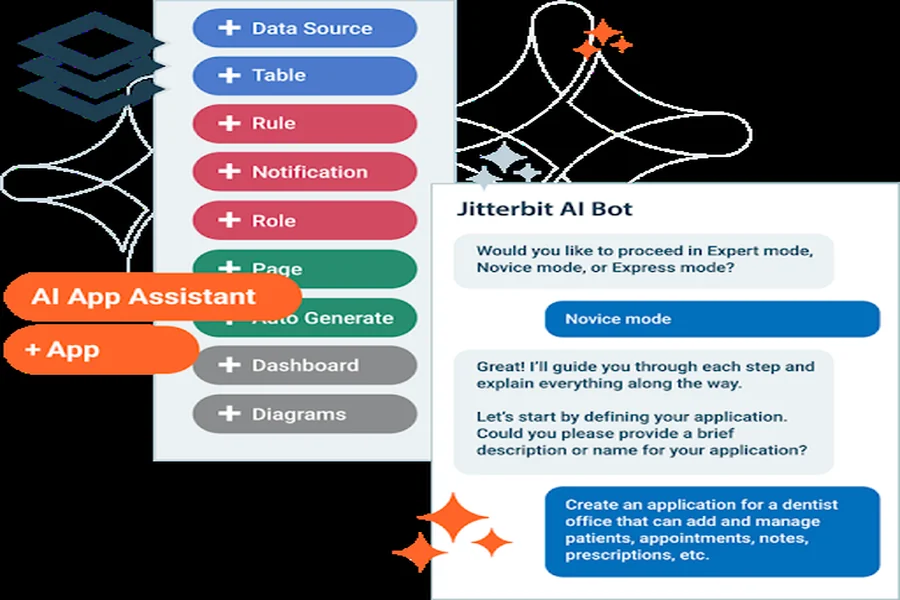
This is where a newer category of tools has started changing the calculus for operations and technology leaders alike: low code platforms. Rather than requiring a team of developers to hand-write every connection between systems, these platforms let technical and semi-technical staff build integrations, automate workflows, and move data between applications using visual, drag-and-drop interfaces backed by pre-built connectors. Firms exploring this space have increasingly turned to comparisons of the leading options to understand which tools actually hold up under the compliance and data-integrity demands of financial services, as opposed to the lighter-weight use cases these platforms were originally built for.
Why This Matters More in Trading Than in Other Industries
Low-code tools have been adopted broadly across retail, healthcare, and logistics for a few years now. Trading and asset management have been slower to move, for good reason. Data integrity requirements are stricter, latency matters, and regulators expect a clear audit trail for anything that touches client funds or trade records. A platform that works fine for automating a marketing email sequence is not automatically fit for reconciling positions across three custodians.
The firms getting real value out of this shift are the ones treating low-code adoption as an operations and compliance decision, not just an IT convenience. That means starting with well-bounded, high-friction workflows: onboarding document collection, trade break reconciliation, regulatory report assembly, or syncing client data between a CRM and a portfolio management system. These are processes with clear inputs, clear outputs, and a paper trail that already exists in some form, which makes them easier to automate safely and easier to prove out before expanding further.
Jitterbit, one of the more established providers in this space, has built its platform around exactly this kind of enterprise integration work, offering pre-built connectors for common financial and operational systems alongside API management and workflow automation tools. For operations leaders evaluating vendors, that combination of connector depth and governance controls tends to matter more than flashy interface design, since the platform needs to survive an internal audit as much as it needs to save time.
What a Realistic Rollout Looks Like
Firms that have had success with this kind of automation tend to follow a similar pattern. They start with a single painful workflow rather than attempting an enterprise-wide integration project on day one. They involve compliance and operations staff early, not just IT, since those are the people who understand where the actual risk and friction live. And they measure success in hours saved and errors avoided, not in lines of code no longer written, since that is the metric that actually justifies the tool to a management committee.
It is worth being honest about the limits here too. Low-code platforms are not a replacement for a proper data governance strategy, and they will not fix a firm whose underlying source systems are unreliable. What they do reasonably well is remove the brittle, hand-built glue code that has historically made integration projects slow and expensive, replacing it with something a smaller technical team can build, monitor, and adjust without waiting on a lengthy development cycle.
For trading firms under constant pressure to do more with leaner operations teams, that is not a small thing. The back office may never be as glamorous as the trading desk, but it is where a surprising amount of a firm’s operational risk actually lives. Closing the gap between front-office speed and back-office process, without a multi-year systems overhaul, is exactly the kind of unglamorous win that adds up.
Readers wanting a closer look at how these platforms compare on connector libraries, pricing, and enterprise readiness can find a fuller breakdown on Jitterbit’s site.
