


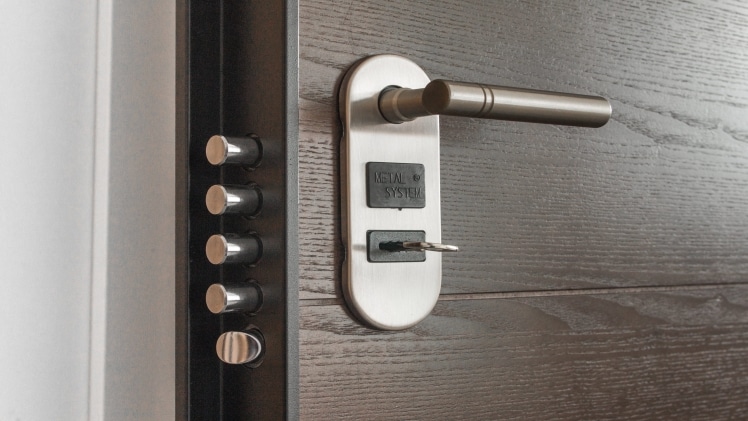
There exist great changes in the technologies that people use to fix various problems in their lives, including the improvement of their homes. Smart door locks are one example of integration of new technologies that include convenience as well as added security features. Intended for today’s lifestyle, these changeable access codes are complementary to producing an efficient and safe electronic lock system. Firstly, this article focuses on a brief understanding of what a smart lock is, its importance, working options, and continually emerging role.
What is a Smart Lock?
A smart lock is an electronic lock designed to act as an innovation of conventional mechanical lock systems. Smart locks do not operate on the basis of physical keys as do standard locks; instead, smart locks can be controlled by Bluetooth, Wi-Fi, or a biometric system to provide or to deny entry. These devices enable users to manage their doors remotely, and more often using a smartphone application or a voice command, making managing home security much more convenient.
Some of the prominent specifications in the existing smart door locks are described.
Smart door locks come equipped with various features aimed at improving user experience and security:
Keyless Entry: In this way, no physical keys are required and allow entry using PIN codes, fingerprint, or mobile application.
Remote Control: If connected to Wi-Fi or Bluetooth, users can control the door’s lock and unlock from a distance, keeping them safe even if they are away.
Access Logs: Most of the smart locks have the logging feature that records when the lock was used and who used it.
Custom Access Permissions: Unlike traditional mechanical keys, Boolean digital keys can be permanent or temporary and can be programmed for individual personalities such as visitors and service providers.
Integration with Smart Home Systems: Smart locks have additional features as a connected hub and are compatible with other smart devices such as cameras, alarms or voice assistants.
Benefits of Smart Door Locks
The popularity of smart door locks is driven by their numerous advantages:
Enhanced Convenience
One is that use of smart locks brings ease in handling access since there is no more dealing with physical keys. SMART locks allow inhabitants to open the door with their smartphones, PIN codes, or fingerprints and are perfect for families and renters.
Increased Security
Real-time alerts on unusual access attempts and the encryption of higher levels improve security in homes. Presence of such features as one time access codes ensures that entry permissions are kept to a very minimum .
Remote Management
Remote access would be one of the most conspicuous benefits of a smart lock because it gives homeowners control over their doors from a distance. For example, if a visitor has come unannounced, access can be provided remotely without requiring to be on the scene.
How Do Smart Locks Work?
Smart locks work with the use of computing devices controlling access through physical components popularly referred to as locks. Fundamentally, these devices act as an electrical- mechanical switch for locking instead of the conventional mechanical switch. For instance, there is the use of a PIN pad or a smartphone application in the access of your car. These locks are also wired with Wi-Fi or Bluetooth connections, through which they obtain commands and offer their status in return.
Application of smart doors
Smart locks are versatile and can be used in various settings:
Residential Properties: They improve home security since it comes with features such as remote access and alert services.
Commercial Spaces: By having code of references which provide access logs and specific employee codes, businesses stand to benefit.
Vacation Rentals: Hosts can offer virtual keys to the guests and save additional time and make the experience of the guest more comfortable.
Addressing Common Concerns
However, smart locks remain a useful addition with crucial concerns created in connection with cybersecurity and battery life. Addressing these issues involves understanding their technical aspects:
Cybersecurity: To avoid such risks smart locks use high encryption standards and release constant software updates.
Battery Life: There are often features of the low battery notification as well as backup power sources incorporated into most smart locks.
The Future of Smart Locks
Future development of smart door locks is expected to be driven by the combination of artificial intelligence and the IoT. From voice recognition, to more advanced biometric systems, the future holds even more promising solutions to capitalizing on smarter locks. The number of customers that choose smart home solutions increases and smart locks are expected to become a trend in households and businesses alike.
Conclusion
Smart lock systems and what is smart lock are a big step forward in home security solutions introducing comfort into home safety systems. As these will provide a keyless entry, remote access, and even connection with other smart gadgets, they meet today’s consumers’ demands. These locks can either be used at home to increase security, or in homes and other facilities to create better accessibility for physically unable persons. It is therefore possible to have more control and less worries about the properties in case this technology is adopted.
