


In recent years, advancements in medical technology have significantly enhanced the precision and efficiency of neurological assessments. Neurological tools are at the forefront of this transformation, offering clinicians advanced capabilities for evaluating and managing neurological conditions. This blog examines five cutting-edge neurological tools that are revolutionizing modern medicine, highlighting their roles in patient care and their impact on clinical practices.
5 Best Neurological Tools
NPi Neurological Pupil Index System
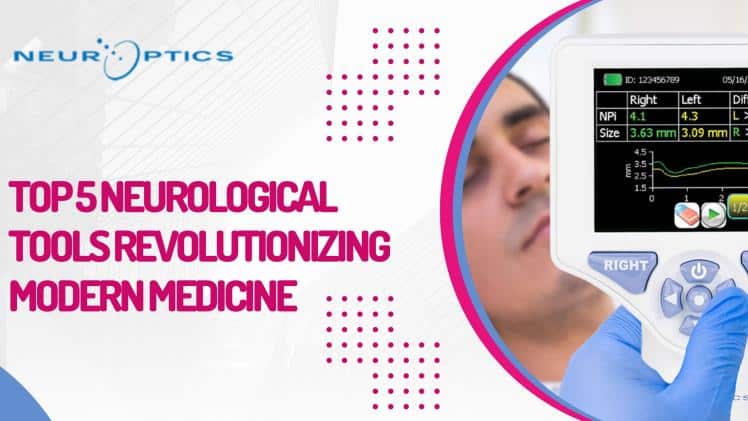
The NPi Neurological Pupil Index (NPi) System represents a significant advancement in the field of pupillometry. This tool offers a standardized approach to evaluating pupil reactivity, providing clinicians with a numerical index that quantifies pupil response to light stimuli. The NPi System is particularly valuable in critical care settings, where it assists in monitoring patients with severe neurological conditions, such as brain injury or stroke.
The NPi index helps clinicians make informed decisions about patient management by providing objective data on pupil reactivity. This tool also enhances the reliability of neurological assessments by reducing subjectivity and variability in pupil measurement. Its integration into clinical practice has improved the accuracy of neurological evaluations and contributed to better patient outcomes.
Portable EEG Devices
Electroencephalography (EEG) is a crucial tool for assessing brain activity and diagnosing neurological disorders such as epilepsy, sleep disorders, and encephalopathy. Traditional EEG systems, however, have often been constrained by their complexity and the need for specialized environments. Recent innovations in portable EEG devices have addressed these limitations, offering more accessible and convenient options for both patients and clinicians.
Modern portable EEG devices are compact, user-friendly, and capable of delivering high-quality data in various settings. These devices facilitate continuous monitoring of brain activity, enabling real-time assessments and long-term tracking of neurological conditions. Their portability has expanded the scope of EEG applications, allowing for more frequent and comprehensive evaluations.
Advanced Pupillometry Devices
Pupillometry, the measurement of pupil reactivity and size, has become an indispensable tool in neurological assessments. Modern pupillometry devices offer precise, real-time measurements of pupil diameter and reaction to light stimuli. These tools provide valuable insights into neurological function, as changes in pupil size can indicate underlying neurological issues, including traumatic brain injury, brainstem lesions, or neurotoxic conditions.
Recent advancements have led to the development of sophisticated pupillometry devices that utilize high-resolution cameras and advanced algorithms to measure and analyze pupil responses with unprecedented accuracy. These devices facilitate rapid, non-invasive assessments that can be integrated into routine neuro exams, enhancing diagnostic capabilities and patient monitoring.
Functional Near-Infrared Spectroscopy (fNIRS) Systems
Functional Near-Infrared Spectroscopy (fNIRS) is an emerging technology used to measure cerebral oxygenation and hemodynamics. fNIRS systems offer a non-invasive method for assessing brain function by detecting changes in blood oxygen levels in response to neural activity. This tool is particularly valuable for studying cognitive processes, brain development, and brain injury.
Recent developments in fNIRS technology have enhanced its sensitivity and spatial resolution, providing more detailed insights into brain function. fNIRS systems are now used in research and clinical settings to monitor brain activity during various tasks and conditions. Their ability to provide real-time, dynamic assessments of cerebral function makes them a powerful addition to neurological diagnostics and research.
Advanced Neuroimaging Systems
Neuroimaging has long been a cornerstone of neurological diagnostics, offering detailed images of brain structures and functions. Advances in neuroimaging technology, including high-resolution magnetic resonance imaging (MRI) and functional MRI (fMRI), have significantly improved the precision and utility of these tools.
Modern neuroimaging systems provide detailed images of brain anatomy and activity, facilitating the diagnosis of a wide range of neurological disorders, including tumors, neurodegenerative diseases, and vascular abnormalities. Enhanced imaging techniques, such as diffusion tensor imaging (DTI) and magnetic resonance spectroscopy (MRS), offer additional insights into brain connectivity and biochemical changes. These advanced neuroimaging systems are instrumental in planning surgical interventions, monitoring disease progression, and evaluating treatment responses.
Conclusion
The integration of these advanced neurological tools into clinical practice has markedly improved the ability to diagnose, monitor, and manage neurological conditions. From precise pupillometry and the NPi™ Neurological Pupil Index to portable EEG devices, fNIRS systems, and advanced neuroimaging technologies, each tool offers unique benefits that contribute to more accurate and effective patient care. As these technologies continue to evolve, they promise to further enhance the capabilities of modern medicine, leading to better outcomes and advancements in neurological health.
