


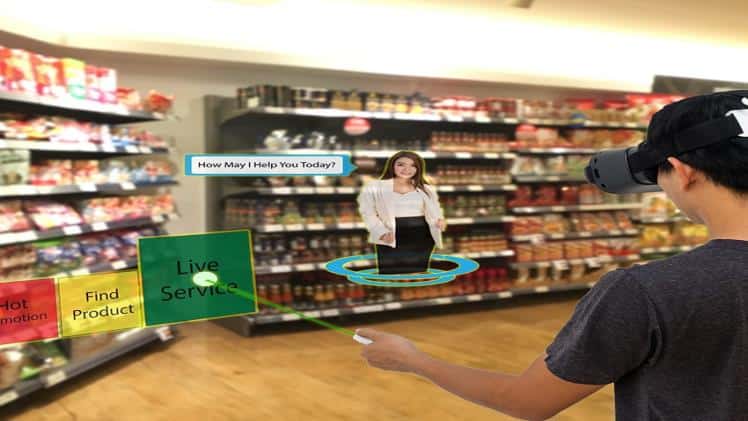
Grocery retailers in Australia and New Zealand are facing problems due to shifting customer needs brought on by various economic issues. Consumers are being more careful with their spending due to escalating living expenditures, rising rental costs, rising interest rates, and an imminent mortgage crisis. As food costs continue to rise, retailers fear they may lose their competitive advantage if they do not quickly adjust to changing customer demands.
The fact that so many consumers are actively seeking ways to reduce their food expenses shows that they are having financial difficulties. Recent research shows that, at 61%, the proportion of consumers who use different money-saving strategies when they shop for groceries has been steadily increasing. This is a great opportunity for retailers to invest in technology that highlights the advantages of loyalty programmes and makes it easier to communicate with customers, both current and potential.
Consumers in the Asia-Pacific (APAC) region are more interested in the tangible benefits of loyalty schemes than in benefits or status. Keeping customers interested requires offering real value in the form of discounts and incentives. To boost total engagement, offer acceptance rates, and loyalty participation—all of which are important drivers of revenue and profitability—grocery loyalty experts have identified several areas that may be improved.
Better Personalisation
One of the key elements of a successful supermarket business is advanced customisation. By leveraging consumer data and individual preferences, retailers may personalise products and give a more gratifying and engaging shopping experience. However, many grocery businesses find it difficult to accomplish mass customisation, especially those with outdated technology. About 31% of grocery loyalty programme managers state that creating tailored offers is their biggest issue.
Personalised incentives have the potential to significantly improve loyalty schemes. Important strategies include delivering offers at the best time for customers to take advantage of them, matching the right offer to the right customer, and customising promotions based on past purchases. With the right technology, retailers can fully realise this potential and enhance their loyalty schemes. As a result, the courses will operate more effectively and be tailored to match the needs of certain clients.
Marketing in the Moment
“Marketing in the moment” is a concept that might revolutionise the retail sector. This tactic integrates customer data with contextual factors, including location, history, and time, to deliver relevant messages or promotions at the ideal time to influence purchasing decisions. Studies show that consumers respond positively to offers presented instantly. 71% of shoppers say that if they were made aware of an offer while in the store, they would consider purchasing the item or find the information useful.
For moment-based marketing to be successful, first-party data, such as loyalty programme information, and contextual data, including location, weather, and seasonality, are required. Using this information, retailers may provide deals that are relevant and timely. Despite their apparent lack of interest, a lot of grocery stores are lagging in adopting this tactic, maybe due to technological limitations. Merely 36% of retailers believe that incorporating location-based incentives into their marketing initiatives would boost their effectiveness. With the right technology, retailers can use moment-based marketing to increase revenue and customer engagement.
Gamification
While moment-based marketing focuses on making offers at the right time, gamification brings a fresh level of engagement that has the potential to significantly boost loyalty programme membership. Customers enjoy playing games, so including gaming components in reward programmes keeps them engaged for longer. Gamification has been very effective in the APAC region, as 74% of consumers said they would participate in games, contests, or challenges through a company’s loyalty programme.
Despite their promise, only 60% of loyalty programmes provide gamification elements like challenges or contests. This gap presents a wonderful opportunity for food businesses to enhance their loyalty schemes. Gamification is an efficient strategy for raising engagement and loyalty since it can be widely used when combined with cutting-edge technology like AI and machine learning.
Unfortunately, many establishments are not adopting gamification strategies rapidly enough. Merely 21% of participants believed that gamifying the shopping experience would elicit the greatest response from customers, and just 23% expressed a desire to gamify their loyalty programmes in the near future. Gamification elements may be added to a loyalty programme without requiring a whole redesign. Thanks to a number of technologies that make this feasible, retailers may quickly and economically improve customer contact by adding these capabilities to their current platforms.
Woolworths: A Case Study on Loyalty Innovation Example
Leading supermarket chain Woolworths in Australia has led the way in developing cutting-edge customer loyalty initiatives. Its dedication to raising client happiness has received recognition on a global scale, most notably from the International Loyalty Awards. With real-time loyalty technology, Woolworths’ Everyday Rewards programme, which has 14 million members, has completely changed the way people purchase.
One of Woolworths’ most famous creations is the Everyday Extra subscription service, which has attracted over a quarter of a million subscribers mostly via word-of-mouth. For an annual membership, members receive monthly savings of 10% on one in-store purchase as well as free products from a select few merchants. This strategy encourages customers to make multiple purchases at Woolworths, which serves to boost customer loyalty to the business. Users of the course on social media are gushing about it, enthusiastically sharing their experiences and discussing the advantages they enjoy.
The Future of Innovation in Loyalty
As the food business evolves, loyalty programmes will remain a crucial tool for retailers looking to establish a rapport with their clientele. Consumers in the Asia-Pacific region are willing to discontinue participation in loyalty programmes that fall short of their expectations since they see these programmes as a way to get genuine value. The time is perfect for grocery shops to invest in digital technologies that will enhance offer distribution, allow for customisation of promotions, and provide fun, interactive gaming experiences.
By using the right strategies and technologies, retailers in Australia, New Zealand, and other countries may effectively transform their loyalty programmes into engines of customer engagement and revenue creation. When the rivalry heats up, those who don’t innovate risk falling behind, but forward-thinking retailers will thrive by offering their clients true value.
