


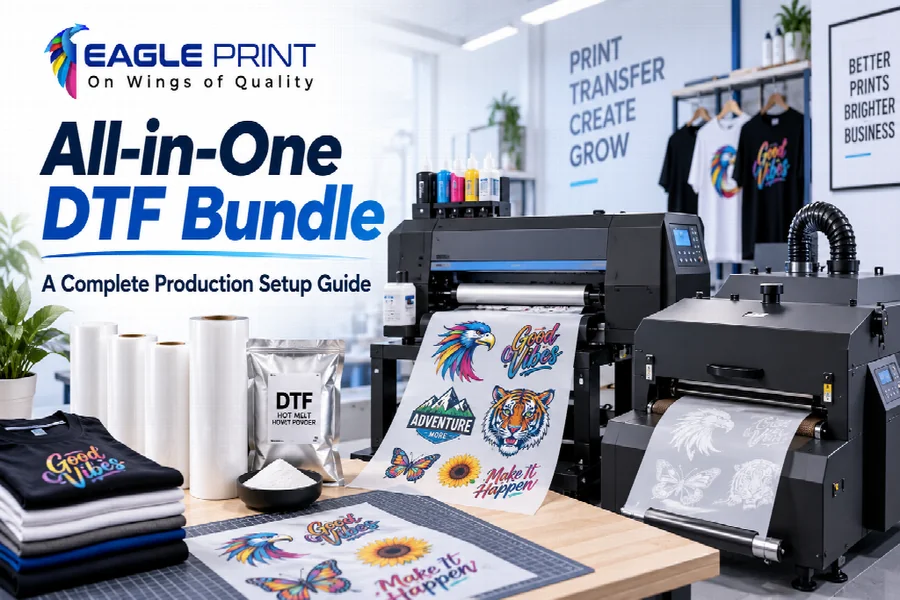
An all-in-one DTF bundle is designed for buyers who want the main production components organized as one working setup instead of sourcing every machine separately. For a new print shop, apparel brand, or growing customization business, that can simplify the buying process—but only if the bundle solves the actual production bottlenecks behind printing, powder handling, curing, airflow, and daily workflow. The key question is whether the setup supports the way you plan to produce.
What Is an All-in-One DTF Bundle?
In practical terms, an all-in-one DTF bundle combines multiple pieces of equipment needed to move a design from digital artwork toward a finished transfer. Depending on the package, that may include a DTF printer, a powder shaker or dryer, and supporting equipment used around the production process. Eagle DTF Print lists an all-in-one DTF printing bundle that groups a printer, powder shaker dryer, and smoke extract filter purifier in one product package.
The value of a bundle is not that every buyer automatically needs the same configuration. Its value is that the major workflow stages can be evaluated together. A printer that looks attractive by itself may still require more equipment, floor space, ventilation planning, power, operator time, and maintenance before it fits real production.
Start With Your Expected Production Flow
Before comparing bundles, estimate what a normal production day will look like. A shop printing occasional small orders has a different requirement from a business preparing transfers throughout the day for customer jobs. Think in terms of repeatable workflow rather than maximum theoretical output.
- Order pattern: Will you print one design at a time, batches of customer artwork, or longer production runs?
- Operating schedule: Will the system run occasionally or for several hours on busy days?
- Staffing: Will one person handle printing and finishing, or will production be split between operators?
- Workspace: Do you have room for loading media, moving printed film, handling powder, curing, and routine cleaning?
- Growth: Are you buying for today’s volume only, or for a realistic next stage of demand?
A useful bundle should reduce unnecessary handoffs. If one stage constantly waits on another, the system may feel slow even when an individual machine is capable of higher output.
Printer Capacity Is Only One Part of the Decision
Buyers naturally focus on printer specifications first, but DTF production is a chain. Printing, adhesive application, curing, transfer handling, and maintenance all affect how smoothly jobs move through the shop. That is why comparing complete systems can be more useful than comparing print engines alone.
If you are still deciding what type of equipment fits your operation, reviewing a broader selection of DTF printers can help you separate bundle convenience from printer-specific requirements. A bundle may be the right path when the included pieces match each other and your intended production model. A standalone printer may make more sense when you already own compatible support equipment.
Check the Powder and Curing Workflow
DTF production does not end when ink reaches the film. Adhesive powder must be handled consistently, and the printed transfer needs an appropriate curing workflow before pressing. For buyers moving beyond very small manual production, the relationship between the printer and the shaker/dryer stage deserves as much attention as the printer itself.
Ask how film moves from one stage to the next. Consider whether the workflow is continuous or requires manual repositioning. Think about how an operator will monitor powder coverage, manage completed film, and keep the area organized. A setup that reduces awkward manual steps can make daily production easier to standardize.
Plan for Airflow, Maintenance, and Cleaning
Equipment purchases should include the less glamorous parts of ownership. Printing systems require routine care, and curing-related processes need an appropriate workspace. Buyers should review manufacturer documentation for ventilation, maintenance, electrical, environmental, and operating requirements before installation.
Build maintenance time into the production plan rather than treating it as an interruption. A system that is easy to access for routine checks can be more practical than one that only looks compact in a product photo. Also plan where consumables, cleaning materials, finished transfers, and spare supplies will be stored.
When Does a Bundle Make More Sense Than Separate Purchases?
An all-in-one DTF bundle is most attractive when a buyer is building a workflow from the ground up and wants fewer compatibility decisions between major components. It can also make sense when an existing business is creating a second production area and wants a defined equipment package rather than piecing together another line.
Separate purchases may be better when you already own part of the workflow, need a very specific production capacity, or want to upgrade only one bottleneck. The decision should come from what is missing in your operation, not from the number of items included in a package.
A Simple Buying Checklist
- Define your typical job size and realistic daily production window.
- Map printing, powder handling, curing, transfer handling, and cleanup as one process.
- Confirm the footprint and operating requirements of every included component.
- Identify which consumables and maintenance tasks will be part of routine operation.
- Compare the bundle with buying the core components separately.
- Choose the setup that removes the most important workflow constraint without creating a new one.
Bottom Line
An all-in-one DTF bundle should do more than make an equipment list shorter. It should create a production path that is easier to understand, install, operate, and scale. Buyers who evaluate the whole workflow—not just printer specifications—are in a better position to choose equipment that fits their space, staffing, order pattern, and growth plans. That makes the bundle decision a production-planning question first and a purchasing question second.
