


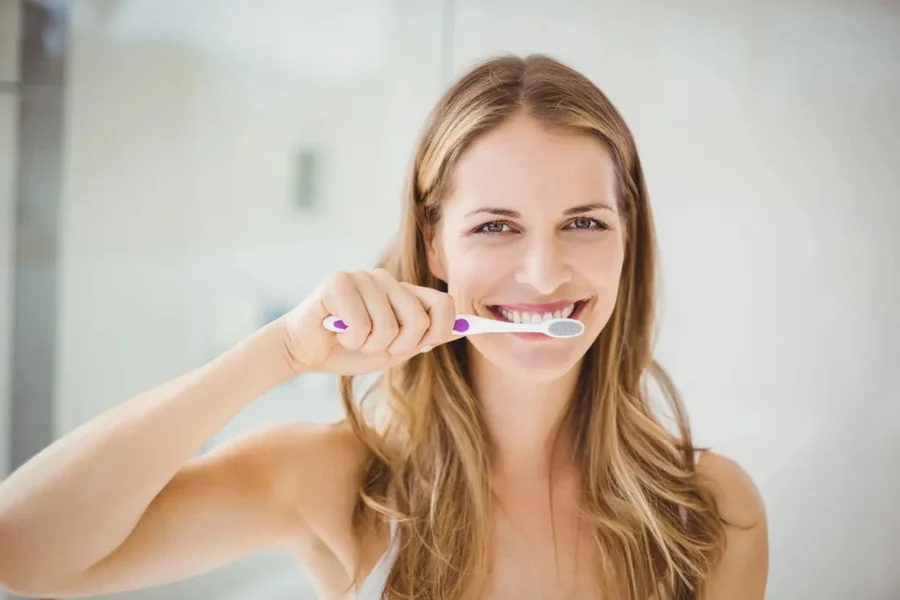
You probably don’t think about your teeth when you’re commuting to work, sitting at your desk, or winding down for the night. But the truth is, your oral health is tied to way more than just how your smile looks in photos. Research keeps showing that what happens in your mouth affects your heart, your blood sugar, and even your memory. The good news? You don’t need a complicated routine to protect yourself. A few small, consistent habits can keep your teeth strong and your body healthier for decades.
We’re not talking about brushing twice a day, though that’s a given. We’re talking about the habits people rarely consider, the ones that quietly protect your enamel, your gums, and your overall health without you even realizing it.
1. Rinse With Plain Water After Every Meal
You don’t always have the chance to brush after lunch, especially if you’re eating at your desk or on the go. But you can always take a sip of water. Swishing plain water around your mouth for about 20 seconds after you finish eating does more than you’d think.
Food particles and acids from your meal sit on your teeth and start attacking the enamel within minutes. Water washes away the loose particles and dilutes the acids, giving your teeth a fighting chance until your next brushing session. This matters even more if you’re drinking coffee, tea, or soda throughout the day. Those beverages are acidic, and water acts as a neutralizer.
Your saliva does this naturally, but it works slowly. Water speeds up the process. Make it a habit right after you swallow your last bite. Your enamel will thank you, and you’ll reduce your risk of decay without any extra products.
2. Eat Cheese and Crunchy Veggies as a Dessert
Most people reach for something sweet after a meal. Swap that dessert for cheese or raw vegetables a few nights a week. Cheese is packed with calcium and casein, a protein that helps rebuild tooth enamel. Studies have shown that eating cheese raises the pH level in your mouth, which means it fights the acid that causes cavities.
Crunchy vegetables like carrots, celery, and bell peppers work differently. Their firm texture scrapes the surface of your teeth as you chew, removing plaque buildup before it hardens. They also require more chewing, which stimulates saliva production. More saliva means more natural cleaning and more minerals delivered to your teeth.
So when that after-dinner craving hits, try a small plate of cheddar and carrot sticks. Your blood sugar stays steadier, your teeth get a gentle cleaning, and you’re feeding your body real nutrients instead of empty sugar.
3. Replace Your Toothbrush on a Schedule, Not by Looks
You can’t always tell when a toothbrush is worn out. The bristles may look fine, but they lose their stiffness and effectiveness long before they look damaged. Dentists recommend replacing your toothbrush every three to four months, and that’s not a random number. It’s about how quickly bristles break down under regular use.
Here’s a trick that makes the timing automatic: mark your calendar for the first day of each season. January, April, July, and October. That’s four replacements a year, and you never have to count the months. Another option is to buy a new brush every time you get a dental cleaning. That way, your fresh brush matches your fresh start.
An old brush doesn’t just clean worse. It also holds onto bacteria and can harbor mold, especially if you keep it in a damp bathroom. A worn brush can also damage your gums if the bristles are splayed and hard. Check the bristles each month, and when they start to look frayed, don’t wait. Swap it out.
4. Breathe Through Your Nose, Especially at Night
Mouth breathing dries out your saliva, and saliva is your body’s natural defense system for your teeth. Without it, bacteria multiply faster, acid stays on your enamel longer, and you’re far more likely to get cavities and gum disease. Dry mouth at night is especially damaging because your saliva production already drops while you sleep.
If you wake up with a dry mouth, a sore throat, or your tongue feels sticky in the morning, you’re likely breathing through your mouth at night. It can stem from allergies, a stuffy nose, or even the position you sleep in. Try sleeping on your side, which encourages nasal breathing. Keep your bedroom humidified if the air is dry. If allergies are the problem, address them with an antihistamine or a saline rinse before bed.
Nasal breathing also filters the air you breathe, warms it, and adds moisture. That’s better for your lungs and your heart, not just your teeth. It’s a simple shift, but it changes your entire overnight environment.
5. Brush Before Breakfast, Not After
Most people brush their teeth right after they eat breakfast, thinking that’s the cleanest approach. But here’s the problem: when you eat, especially acidic foods like fruit, yogurt, or toast with jam, the acid softens your enamel. Brushing at that moment basically scrubs away the softened enamel, which wears down your teeth over time.
Brush before you eat instead. That clears away the plaque and bacteria that built up overnight, so you’re not swallowing that gunk with your first bites. It also coats your teeth with a thin layer of fluoride from the toothpaste, which protects them from the acid of your breakfast. If you really want to brush after a meal, wait at least 30 minutes. Let your saliva do its job and remineralize your enamel first.
When you swallow that first sip of coffee or orange juice, your mouth won’t have that overnight film on your teeth. You’ll feel fresher, and your teeth will keep their protective layer intact.
6. Chew Sugar-Free Gum After Snacks
Sometimes you eat a snack and you’re nowhere near a toothbrush. A quick and effective way to protect your teeth in those moments is to chew sugar-free gum. It doesn’t clean your teeth like brushing, but it does a few specific things that matter.
First, it stimulates saliva flow dramatically, up to ten times the normal rate. That saliva washes away food particles, neutralizes acids, and delivers calcium and phosphate back to your enamel. Second, the gum itself traps particles and removes them from the surfaces of your teeth. Third, it keeps your mouth from getting that dry, sticky feeling that invites bacteria.
Look for gum with xylitol, a natural sweetener that studies show actually reduces the bacteria that cause cavities. Keep a pack in your car, your desk, and your bag. When you finish a snack, pop a piece in for about 15 to 20 minutes. Your teeth get a mini bath, and your breath gets fresher as a bonus.
7. Check Your Tongue for Early Warning Signs
You look at your teeth in the mirror every day, but when’s the last time you actually looked at your tongue? Your tongue can tell you a lot about your overall health. A healthy tongue should be pink, moist, and fairly smooth. If you notice a white coating, it could mean an overgrowth of yeast or simply a buildup of dead cells and bacteria. If you see red patches, sores, or cracks that don’t heal, that’s worth a professional look.
Checking your tongue takes ten seconds. When you’re doing your daily hygiene routine, stick it out and look in the mirror. Check the top, the sides, and underneath. Notice any changes that last longer than two weeks, and don’t ignore them. Many systemic health issues, from vitamin deficiencies to autoimmune conditions, show their first signs in your mouth.
Your tongue also deserves a gentle scrub once a day. Use your toothbrush or a tongue scraper to remove the bacteria and debris that settle there. It reduces bad breath, improves your taste buds, and keeps your mouth healthier overall. It’s not a complicated step, but it’s one that most people skip entirely.
8. Don’t Skip Regular Dental Checkups, Even If Nothing Hurts
The biggest mistake people make is waiting for a problem before they see a dentist. Tooth decay and gum disease don’t hurt until they’re advanced. By the time you feel pain, the issue often requires a much larger procedure than it would have a year earlier. Regular visits catch small problems before they become big, expensive ones.
You should see a dentist at least twice a year, even if your smile looks perfect and you have zero complaints. Professional cleanings remove tartar that you can’t brush away at home. X-rays catch issues hiding between your teeth or beneath your gums. And a good dentist will check for signs of oral cancer, which is highly treatable when caught early.
If you’re due for a checkup, find someone who makes you feel comfortable. Dental anxiety is real, and a good practice understands that. Look for a cosmetic dentist in edison or your local area who takes time to explain things and doesn’t rush you through appointments. The relationship you build with your dentist has a direct impact on how often you show up, and showing up matters more than any at-home routine.
Your Health is in Your Habits
None of these habits are complicated, and none of them require expensive products or a huge time commitment. They’re mostly about making small adjustments to the things you already do every day. Drink more water, eat a snack that helps your teeth, check your tongue in the mirror, replace your toothbrush on schedule, and keep your dental appointments.
Your mouth is the doorway to the rest of your body. Protect it, and you’re protecting your heart, your immune system, and your overall quality of life. Start with one habit this week. Just one. Once it feels automatic, add another. Six months from now, you’ll look back and wonder why you didn’t do these things sooner.
