


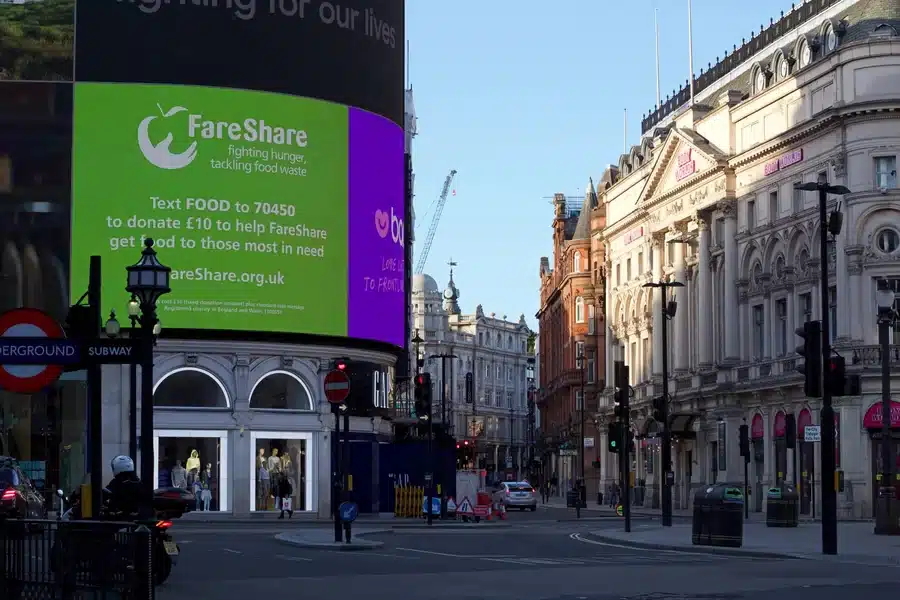
Billboards have come a long way from static roadside signs. Today’s outdoor advertising landscape is driven by data, interactivity, and digital experiences that help brands connect with audiences in more targeted ways.
As consumers spend more time on the move and less attention on traditional media, advertisers are turning to smarter billboard technology to create memorable campaigns. From AI to augmented reality, modern billboard innovations are changing how brands approach visibility and engagement.
1. Programmatic Billboard Advertising
Programmatic advertising has transformed online marketing and is now reshaping outdoor advertising as well. Programmatic billboard technology automates ad buying by leveraging data and algorithms to place ads strategically.
Brands can purchase billboard space based on audience behavior, location trends, or time-sensitive conditions. This technology helps advertisers improve efficiency while reducing wasted impressions. A billboard advertising agency often uses programmatic tools to optimize campaigns and deliver better return on investment for clients.
2. Digital Billboards With Real-Time Content Updates
Digital billboards are among the biggest innovations in outdoor advertising. Unlike printed displays, these billboards allow advertisers to change content instantly. Brands can rotate multiple ads throughout the day or schedule messaging based on peak traffic hours.
Flexibility makes campaigns more relevant and responsive. A restaurant can advertise breakfast in the morning and dinner specials later in the evening, while retailers can promote flash sales instantly. Real-time updates also help brands respond quickly to trending topics or live events.
3. Artificial Intelligence for Audience Targeting
Artificial intelligence is becoming increasingly important in billboard marketing. AI-powered systems analyze audience data, traffic flow, and consumer behavior to determine the best locations and times for specific ads.
Some systems can even identify patterns such as commuting habits or local event attendance. This allows brands to deliver more personalized messaging to audiences likely to engage with the product or service being advertised. AI can also recommend creative adjustments that improve performance over time.
4. Interactive Touchscreen Billboards
Interactive billboards encourage direct engagement between consumers and brands. Touchscreen technology allows people to browse products, participate in contests, or explore services directly on the billboard.
These experiences create stronger brand recall because users actively participate rather than passively viewing an ad. Interactive displays are especially effective in high-foot-traffic areas such as shopping districts, airports, and entertainment venues.
5. Augmented Reality Billboard Experiences
Augmented reality (AR) blends digital visuals with the real world. AR billboards create immersive campaigns that capture attention in unique ways. Consumers can scan a QR code or use a smartphone app to unlock animated features, games, or virtual product demonstrations.
This technology helps brands create memorable experiences that extend beyond the billboard itself. AR campaigns also encourage social sharing, increasing organic reach through user-generated content.
6. Mobile Integration and QR Code Technology
Modern billboards are increasingly connected to mobile devices. QR codes, near-field communication, and mobile integrations allow consumers to interact with advertisements instantly.
A passerby can scan a billboard to receive coupons, watch videos, or visit a landing page. This creates a direct bridge between physical advertising and digital engagement. Mobile connectivity also makes it easier for brands to track campaign effectiveness and customer interactions.
7. Dynamic Weather and Location-Based Advertising
Dynamic billboard technology can adjust messaging automatically based on local conditions. Weather-responsive billboards are particularly popular because they make ads feel timely and relevant.
For example, a beverage company might run cold drink promotions during hot weather, while a clothing brand might advertise rain gear during storms. Location-based customization can also tailor ads to nearby audiences, increasing the likelihood of engagement.
8. Sustainability and Energy-Efficient Displays
As sustainability becomes more important to consumers, billboard technology is evolving to reduce environmental impact. Modern digital billboards often use energy-efficient LED systems that consume less power than older displays.
Some billboard companies are also exploring solar-powered signage and eco-friendly materials. Sustainable innovation not only reduces operational costs but can also improve brand perception among environmentally conscious consumers.
9. Advanced Analytics and Performance Tracking
One of the most significant innovations in billboard technology is the ability to measure campaign performance more accurately. Advanced analytics tools can estimate audience demographics, track mobile device movement, and monitor engagement patterns.
Brands no longer have to rely solely on assumptions about billboard effectiveness. Instead, they can access detailed reporting that helps refine future campaigns. A billboard advertising agency may use these analytics to compare locations, optimize creative strategies, and improve long-term advertising performance.
The Future of Billboard Advertising
Billboard advertising continues to evolve alongside consumer technology and digital behavior. Today’s campaigns are no longer limited to static visuals along highways. They are interactive, data-driven, and increasingly personalized experiences designed to capture attention in crowded environments.
Brands that embrace these innovations can create stronger audience connections while improving campaign efficiency and measurable results. Whether through AI targeting, augmented reality, or programmatic buying, the future of outdoor advertising offers more creative possibilities than ever before.
As technology continues to advance, businesses that partner with an experienced billboard advertising agency may be better positioned to adapt and stand out in an increasingly competitive advertising landscape.
