



In the last few years, crocheting has had a massive revival in trend, bringing forth not only pretty handcrafted pieces but also a wealth of mental and emotional benefits. This craft goes much beyond passing the time. It is a fulfilling activity that many swear by because of its calming effects. As people worldwide search for fulfilling pastimes, crocheting emerges as a front-runner — and not just for its beautiful results but also due to its capacity to enhance wellness. In this article, we’ll discuss its main benefits and give tips on how to learn to crochet.
1. Mental Health Boost
Psychological studies have shown a relationship between creative activities and mental health. Crocheting can induce a meditative state, where it allows the crafter’s mind to focus on very simple, repetitive motions. This mindfulness not only helps reduce stress but also provides a distraction from daily concerns. It gives time to be free within an otherwise very busy life and hence brings relaxation and clear thought. So, whether you’re creating a cozy throw or a delicate doily, you’re also creating tranquility.
2. Enhanced Emotional Resilience
Crafting often taps into self-expression for feelings that need to be churned constructively. Crocheting gives tangible use of those pent-up feelings wherein one can create something beautiful and even functional. In return, many crafters state that completing a project leads to feelings of accomplishment and, in turn, enhances their self-esteem.
3. Social Connections
Another important benefit of crochet is that it creates a sense of community. In real life or online, people can get together and share this passion. Social connection is important, especially during times of isolation.
Many crafters believe that their social circles within the crafting community help them develop meaningful relationships. As some of these connections become about sharing tips and patterns as well as stories, bonds are created that increase the sense of belonging for every individual involved.
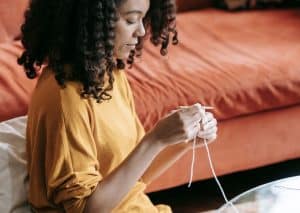
4. Cognitive Skills Development
Learning the new stitches challenges the brain and lifts cognitive function. It has been proven that activities that allow one to apply concentration and problem-solving skills serve as memory boosters and enhance cognitive flexibility.
As skills develop, confidence also begins to grow. Hence, mistakes are accepted, and the ability to meet challenges equips critical thinking with experience. Thus, crocheting as a routine practice can be considered an exercise for the brain — a fun and creative method to keep one’s mind sharp.
5. Physical Benefits
Believe it or not, even crochet is capable of contributing to physical well-being! The repetitive motion of crocheting will help the individual improve fine motor skills and hand-eye coordination. For people who are convalescing from an injury or those who suffer from arthritis, this would serve as a dexterous maintenance practice in an extremely gentle way.
Therapeutic benefits related to craft activities, especially for crochet, go beyond what is purely understood as physical rehabilitation. It engages hand musculature and is thought to be a more enjoyable approach to physical therapy.
How to Crochet for Beginners
Crocheting is a hobby accessible to anyone and the basics can be mastered in a short time. Here’s how to begin your crafting journey with the essential tools and helpful resources.
Essential Crochet Tools
The most basic supplies include a crochet hook, some yarn, and a pair of scissors. Crochet hooks come in many different sizes, and the size you require will depend on the weight of the yarn and the project you are working on. A good choice for beginners might be a 5 mm or 6 mm hook used with a worsted yarn (medium weight). Later, as you get more practice, you can equip yourself with more hook sizes, expanding your crochet toolkit.
Mastering Crochet Basics
After you’ve collected your materials, start with the crochet basics. Learn how to make a foundation chain that serves as the base of most crochet patterns. Before you start working on your first projects, master the most basic crochet stitches, such as single crochet, double crochet, and half double crochet. These techniques are used in almost all patterns.
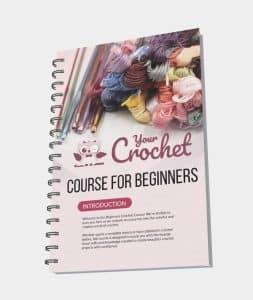
Free Online Crochet Course for Beginners
If you’re looking for step-by-step guidance, check out this free online course – How to Crochet for Beginners – which includes everything a beginner should know. This crochet guide will walk you through the entire process, from holding the crochet hook and yarn, understanding common crochet terms, and completing your very first stitches. The easy-to-follow tutorials are there to help visual learners and give you a solid base. The course is also available to download as a free PDF so you can easily print it out.
Conclusion
Crochet far exceeds providing just the beauty of an item. It can be used as a therapeutic tool for mental health. For someone willing to start crocheting, just a simple ball of yarn and a crochet hook can do wonders. While we struggle through the difficulties that life throws at us, maybe it is time to pick up a hook and find a healthier mind and spirit.
