


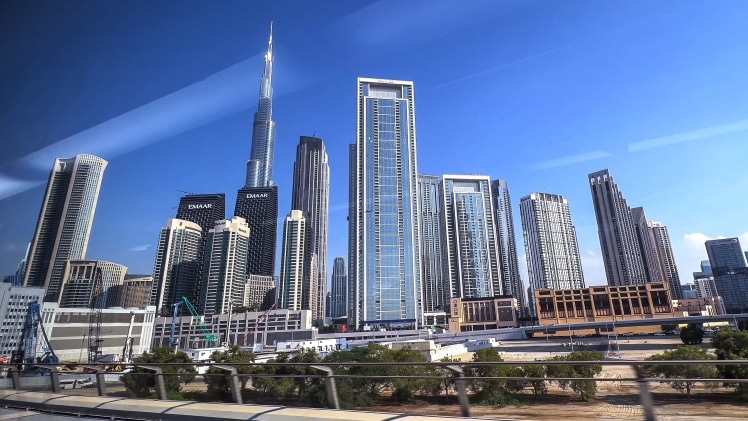
The UAE is a country with seven Arab kingdoms. Although each kingdom has a level of self-control, political power resides in the city of Abu Dhabi while Dubai is its economic power. Other regions are also trying to grow their economies to the level of these two.
This is important in understanding why the prices of properties for sale in the UAE have grown so much when the rest of Asia is experiencing severe cutbacks in real estate investment. This article talks about the two major economies in the Emirates and their housing market. It gives a comprehensive details about price increment on property prices in UAE in 2024, while focusing attention on two cities: Dubai and Abu Dhabi. Including but not limited to villas and apartments in these two cities.
Abu Dhabi
The seat of power and politics of UAE, the capital, the backbone; Abu Dhabi. It is the political home of the Emirates and unlike Dubai, it is not renowned for tourism or regarded as an international congregating area like Dubai, but for its outstanding and resounding economy, which is steady enough to earn good returns for anyone investing in it, moreso if you are looking to buy property in UAE for investments.
Dubai
For close to 30 years now Dubai has been open for business. This has given the Emirati kingdom the upper hand among its equals when it comes to doing business with the outside world. Dubai has the largest population size among the Emirates kingdoms and also its best economy at least in terms of diversification. Unlike most Middle Eastern nations, thanks to Dubai, the UAE’s reliance on oil has been significantly reduced to a decent level and that is the height countries like Qatar and Saudi Arabia are trying to attain.
Looking into housing market in the UAE
Real estate in Dubai has been witnessing superb growth since the 2000s. Between 2002 and 2009, the time of the opening of the Burj, property prices rose by almost 400%. Then came the period of megaprojects; Jumeirah Garden City, Palm Jumeirah, and The Lagoons, these projects placed Dubai on its road as one of the fastest-growing cities in Asia and the world.
Another factor that has made the property investment in UAE’s housing market one of the most competitive; especially for foreigners, was the passing of the foreign property ownership law in 2006. This law created a boost in foreign investment in UAE properties. It has resulted in foreigners being able to purchase properties in the UAE and earn rental income or higher resale value on their investments.
However, the global crunch in 2008 created a depressed market which rebounded in 2012. For two years, house prices in the UAE went up by over 21% year-on-year. But that led to a glut of properties amid reduced demand. Another depression followed.
Depressed housing market before the pandemic
Apart from excess supply and investments in real estate, some other factors in the housing market decline include:
- The introduction of the Federal Mortgage Cap in 2013 to combat high prices for houses and rents in the Emirates. This slowed down price rises particularly in Abu Dhabi and Dubai
- Doubling of property registration fees by the Dubai Land Department from 2% to 4%
- A 5% value-added tax on home sales which applied three years after the completion of the project
- The COVID-19 pandemic impacted demand for homes and stopped new construction.
The factors above resulted in a drop in real estate transactions and stopped many construction projects. In the years before the Mortgage Cap, house prices in the Emirates, particularly Dubai, were increasing as high as 20% every year therefore the government had to regulate the mortgage market to avoid spiraling out of control. For five consecutive years up to 2020, prices for villas, apartments, and flats fell consistently.
Soaring growth
Real estate in Dubai and Abu Dhabi entered a new phase especially after normal activities resumed after COVID-19. House prices in Abu Dhabi witnessed a 2% rise on average while properties for sale in Dubai had more than 9%. This is fascinating because the growth continued in the following year in both cities. Abu Dhabi house prices moved up a little, just 1.46%, but houses in Dubai had another 9% hike.
Dubai’s housing market is now getting even better. Increasing demand last year and more local investments saw an upturn in prices for villas and apartments in 2023. Especially in Dubai, rates skyrocketed by more than 20%. Even the usually conservative Abu Dhabi real estate market gained almost 5%. Making this an optimal period to gain real estate for investments in the UAE, not only Dubai and Abu Dhabi alone.
How much has real estate changed
Real estate price/cost in Abu Dhabi as of 2023 had a little gain. Prices of apartments rose by over 4% as compared to 2022, which had less than 1% growth. Villa prices also went up by more than 7% in 2023.
Keeping up with price changes in Dubai, property prices in Dubai as of 2023 were at their peak. For apartments, prices easily witnessed 19% during 2023. Which was double what it was in 2022.
Villas in Dubai were not left out. A move up 21% was a big surprise, particularly because the market for villas witnessed a 12% surge in 2022. Right now, on average, the price for an apartment in Dubai is AED1,500,000 while the average price for purchasing a villa would set you back AED3,200,000.
Which investment might be worth it now in UAE
This might be the best time to buy property in UAE since it is being rated highly and eyed by a lot of investors right now. More investments are still being expected in the city. Many investors from China, Latin America, India, UK are expected to enter the emirate’s property market in 2024 especially real estate in Dubai.
According to emirates.estate, the biggest market for real estate in the UAE remains in Dubai. The Dubai Airport is also expected to receive more visitors in 2024 and this will grow demand positively. Interest from both local and international investors is driving residential real estate prices higher.
For investments, you can consider ready-to-occupy properties as your best bet for quick, immediate returns. Compared to off-plan properties which might take longer to generate returns, you can earn rental income almost immediately due to increasing demand.
The growth continues
Fortunately, for investors, as new units are being built, demand continues to outstrip supply hence prices are going up. In Dubai and Abu Dhabi, more residential units are being planned for the next six years. While this might be expected to create a glut of supply, not all units might be ready on time. But at the present moment, property demand continues to remain steady, outstripping supply, therefore property prices in the Emirates will likely go up.
