



Matching your workouts to your menstrual cycle (often called cycle syncing) means adjusting your exercise plan to fit the hormone changes that happen across the month. Instead of forcing hard workouts on days when your energy is low-or taking it too easy when you actually feel strong-cycle syncing helps you choose training that makes sense for how your body feels. The goal is to work with your natural rhythm so you can perform well, manage your energy, and support your overall health. If you want to learn more about how hormones and fitness connect, a Menstrual Cycle Coaching Course can give you useful guidance and practical strategies.
This method is based on a simple idea: your body does not feel the same every day, so your training should not be the same every day either. When you learn the main phases of your cycle and what hormones tend to do in each phase, you can make better choices about workout type and intensity. Over time, this can help you feel more connected to your body and make exercise feel easier to stick with.
What Is Cycle Syncing for Workouts?
Cycle syncing for workouts is a whole-body approach to fitness that takes hormone changes into account. It means you purposely adjust your workouts (and sometimes food and lifestyle habits) based on the phases of your menstrual cycle. It is not a strict rule that works the same for everyone. Cycle length can vary a lot-often from 21 to 38 days-and only a small number of people have a perfect 28-day cycle.
The main idea is to use the natural rise and fall of hormones like estrogen and progesterone to get more from your training, reduce unwanted side effects, and feel better during the month. Research on cycle syncing is still growing, but many people find it helpful because it gives them a clear way to listen to their body and plan workouts with more confidence.
How Does the Menstrual Cycle Affect Physical Performance?
Your cycle can affect performance because hormones shift throughout the month. Estrogen is usually higher in the follicular and ovulatory phases. Higher estrogen is often linked to more energy, better strength, and sometimes a higher pain tolerance. Some research suggests that heavy strength training in the follicular phase may lead to better strength progress than training the same way in the luteal phase.
In the luteal phase, progesterone rises. This can slightly raise resting body temperature, which may make it harder to cool down during workouts and may lead to feeling tired sooner. Progesterone can also relax smooth muscle. Some people notice lower energy and slower recovery during this phase. At the same time, research results are mixed. For example, a 2021 study in Frontiers in Physiology found no clear difference in strength and power in high-level athletes across cycle phases. Even so, many people notice clear changes in how they feel and how hard workouts seem at different times of the month. That is why your own experience matters.
What Are the Four Phases of the Menstrual Cycle?
For cycle syncing, people often split the menstrual cycle into four phases. Each phase comes with hormone shifts that can affect energy, mood, and how your body feels during exercise. Knowing these phases makes it much easier to match your workouts:
- Menstrual Phase (Days 1-7, approximately): Starts on Day 1 of your period. Estrogen and progesterone are at their lowest. Many people feel tired or get cramps and bloating, especially in the first few days, as the uterus lining sheds.
- Follicular Phase (Days 8-13, approximately): This overlaps with the end of the menstrual phase. Estrogen slowly rises as follicles grow in the ovaries. As estrogen increases, many people notice more energy and feel stronger. This phase length varies a lot, which is one reason cycle length differs between people.
- Ovulatory Phase (Around Day 14, approximately): A surge in luteinizing hormone (LH) and follicle-stimulating hormone (FSH), along with peak estrogen, releases an egg from the ovary. This phase is short (about 16 to 32 hours) and is often linked with high energy, strength, and higher sex drive.
- Luteal Phase (Days 15-28, approximately): After ovulation, estrogen drops and then progesterone rises to prepare the uterus for a possible pregnancy. Estrogen increases again but usually not as high as before ovulation. This phase is often about 14 days. Many people feel energy slowly drop and may notice PMS symptoms like mood changes, fatigue, and cravings as progesterone peaks.
These day ranges are averages. Your cycle may look different, so tracking your own cycle helps you learn what is normal for you.
Why Align Workouts With Your Menstrual Cycle?
Many people align workouts with their cycle because they want to support what their body naturally wants to do, instead of always pushing through. While researchers are still working out exactly how big the benefits are, many people (and some studies) suggest there are good reasons to try it.
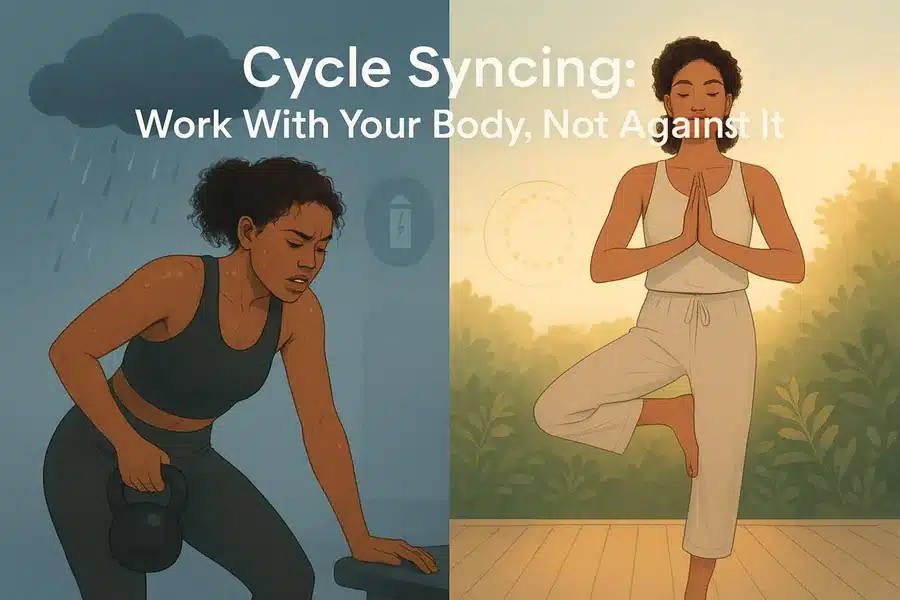
Cycle syncing can help you pay closer attention to your body, notice patterns, and respond in a way that supports both physical and mental health. It also reminds you that your abilities can shift through the month, because hormones shift through the month.
Improves Energy Management and Motivation
A common benefit people report is better energy planning. Instead of feeling bad about low energy during your period or the days before it, you can expect those dips and plan easier movement. Then, when estrogen rises in the follicular and ovulatory phases, many people feel more motivated and ready for harder training. This can help prevent burnout and can make exercise feel more supportive instead of stressful.
Reduces Risk of Injury and Burnout
Changing intensity based on your cycle may help lower injury risk and mental burnout. Some studies suggest ACL injury risk may be higher in the follicular phase, possibly because estrogen can affect ligaments. If you keep that in mind, you may choose to be extra careful with jumping and high-impact moves, and focus on good technique. Also, avoiding extreme effort in the late luteal and menstrual phases can reduce strain and help you stick with training long term.
Supports Hormonal Balance
Matching workouts to your body’s rhythms may support a steadier hormone experience. Cycle syncing is not a treatment for hormone disorders, but it can make symptoms feel easier for some people. For example, you might prioritize more rest when progesterone is high and energy is low, and do harder training when estrogen is rising and you feel stronger. This approach may help with mood, PMS symptoms, and general balance.
Improves Fitness Results and Recovery
Planning workouts around your cycle can also support progress and recovery. When energy and strength are higher (often follicular and ovulatory), you can focus on building muscle, improving endurance, and pushing harder. When energy is lower (often menstrual and late luteal), you can focus on easier movement and recovery so your body can repair. This style of training changes across the month instead of staying the same every week, which can make progress feel more steady and reduce the “always tired” feeling some people get from training hard all the time.
Menstrual Cycle Phases and Recommended Workouts
Knowing what movement usually fits best in each phase is the base of cycle syncing. These are not strict rules-think of them as a starting point that you adjust based on your own signals.
Menstrual Phase: Gentle Movement and Rest
During the menstrual phase (about Days 1-7), estrogen and progesterone are low. Many people feel more tired, deal with cramps, or feel “off” as the uterus lining sheds. This is a time for softer care. Exercise is usually safe during your period, and light movement can even help cramps, but the main focus is recovery-style movement.
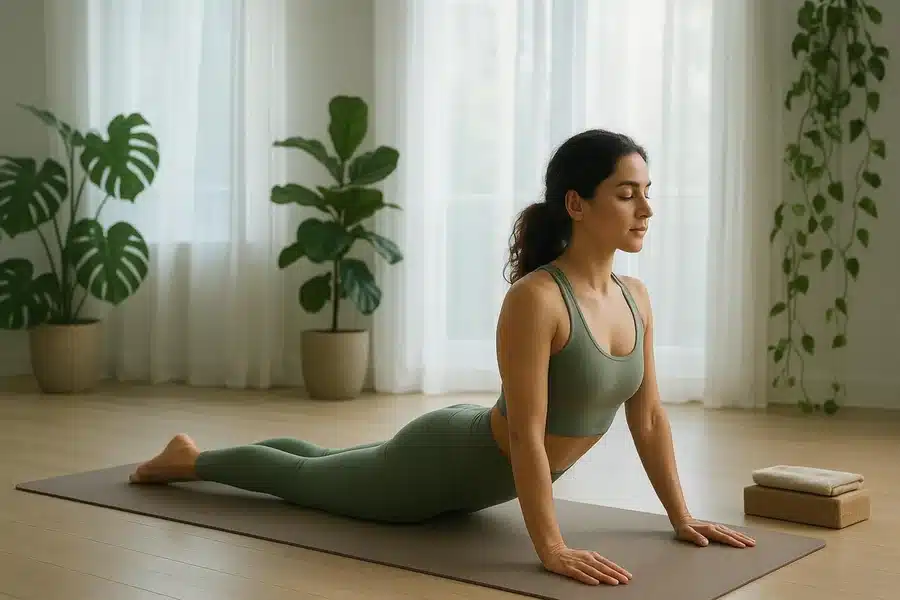
Good choices include yoga (especially restorative or yin), Pilates, light stretching, and easy walks. These can help circulation, relax the body, and reduce discomfort without taking too much out of you. If you feel very tired or have strong pain, resting is a valid choice.
Follicular Phase: Building Intensity and Endurance
As you move into the follicular phase (about Days 8-13), estrogen rises and many people feel a clear lift in energy. This phase is often linked with feeling stronger and more ready to train. Your body may also respond well to building muscle and improving fitness here.
This is a good time to increase training intensity. You might do HIIT, heavier strength training, running, cycling, or other cardio that challenges you. Compound lifts like squats, lunges, and deadlifts can work well. One note: since some research suggests ACL risk could be higher in this phase, pay close attention to form and be careful with jumps and cutting movements.
Ovulatory Phase: Peak Performance Activities
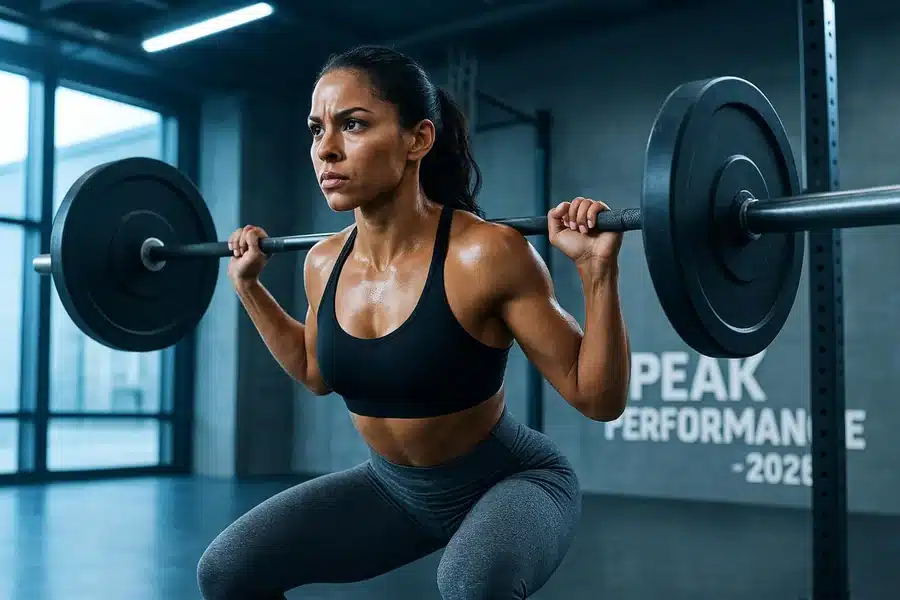
The ovulatory phase (around Day 14) is short but often feels powerful. Estrogen, LH, and FSH surge, and many people report their best energy, strength, and focus here. This can be a great time for workouts where you want to give your highest effort.
Good options include kickboxing, faster running or sprints, rowing, heavy lifting, or a tough HIIT session. If you like testing your limits or trying for a personal record, this phase may be a good match. Workouts that felt good in the follicular phase often still feel great here, sometimes with an extra boost.
Luteal Phase: Moderate Intensity and Active Recovery
After ovulation, the luteal phase (about Days 15-28) starts. Estrogen drops and progesterone rises. Many people notice energy slowly goes down, and body temperature can run a bit higher. As the phase goes on, PMS symptoms like fatigue, bloating, and cravings may show up. Recovery from very hard workouts may also take longer.
Early luteal can still feel fine for moderate workouts like swimming, cycling, or steady running. Later luteal is often a better time to reduce intensity. Focus on controlled strength training, Pilates, yoga, and low-impact cardio. Some studies suggest lower-body strength work may feel easier in this phase, so you might schedule more leg-focused sessions. Choose workouts that feel supportive, not draining, and put extra focus on recovery and lowering stress.
How to Start Aligning Workouts With Your Cycle
Starting cycle-synced training is less about following a strict plan and more about learning from your own body. You need time, curiosity, and a willingness to change plans when needed. The goal is a personal routine that fits your body and your life.
Your cycle is unique, and what helps someone else may not help you. The best approach is to collect your own information and use it to guide your training choices.
Track Your Menstrual Cycle Accurately
The first step is tracking. Write down the first day of your period (Day 1) and how long it lasts. Also track symptoms, mood, energy, and how motivated you feel to move. You can use a period tracking app or a calendar and notebook. Tracking for several months helps you see patterns in energy, mood, and performance across your phases.
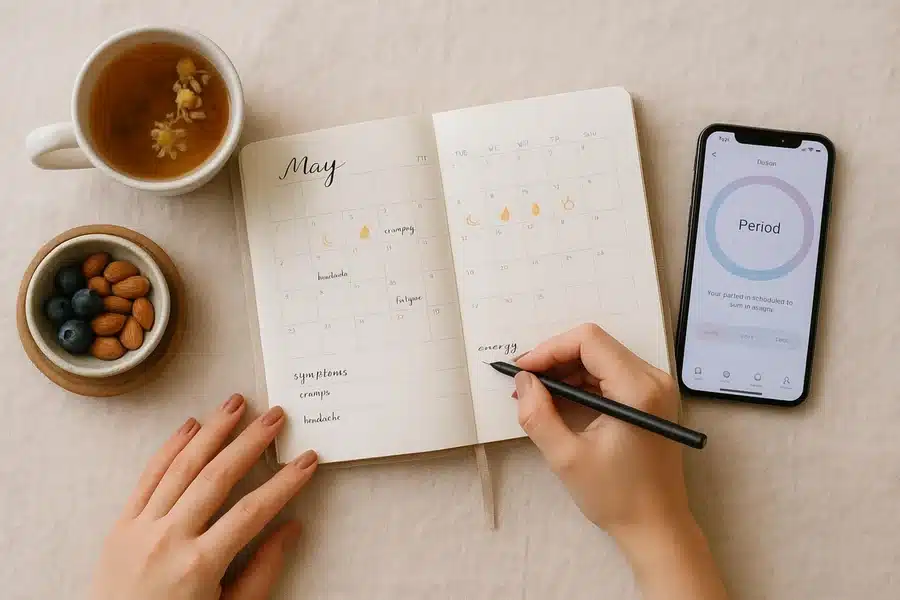
Notice small changes: Which days do you feel strongest? When does tiredness show up? Are there days when cramps or bloating make certain movements feel worse? This type of personal tracking gives you the clearest picture of how your cycle affects your workouts.
Plan Your Training Around Cycle Phases
After a few months of tracking, you can start planning workouts around your usual patterns. Using the general phase guide (menstrual, follicular, ovulatory, luteal) plus what you see in your notes, assign workout styles and intensity levels. For example, you might place heavier lifting and harder cardio in follicular/ovulatory, and schedule yoga, Pilates, and walking during menstrual/late luteal.
Start small. Try changing just one or two workouts per week at first, then adjust more as it starts to feel natural. Treat it like a flexible outline, not a strict calendar.
Listen to Your Body and Adjust as Needed
This is the most important part. A plan can help, but how you feel day to day matters most. If you planned a hard workout in your follicular phase but wake up exhausted or sick, take that seriously. Do an easier workout or rest. If you feel surprisingly energetic during a phase where you usually go gentler, it is fine to do more-if it feels good.
Your sleep, stress, cramps, soreness, and mood are all feedback. Using that feedback helps prevent overtraining, reduces stress, and makes fitness easier to maintain. Cycle syncing is about working with your biology, not forcing your body into a fixed plan-a principle at the heart of the coaching approach taught at Cyclical School.
Monitor Progress and Results
As you try cycle-synced workouts, keep tracking how it affects your training and your daily life. Write down how you feel after workouts in each phase. Are you less tired overall? Are PMS symptoms easier? Do you feel like strength or endurance progress is more steady?
Big fitness changes (like muscle gain or endurance jumps) usually take months. But many people notice changes in mood, energy, and body awareness sooner. Use what you learn to adjust workout type, length, and intensity over time.
Other Considerations and Practical Advice
Cycle syncing can work well for many people, but it will not look the same for everyone. Irregular cycles, hormonal birth control, and normal life stress can all change how useful phase-based planning is. Below are common situations and simple ways to handle them.
The main goal is a healthier relationship with exercise and your body. Adjust ideas to fit your needs instead of trying to follow a strict method.
What If Your Cycle Is Irregular or You Use Birth Control?
If your cycle is irregular, the usual phase pattern may be harder to predict. Conditions like Polycystic Ovarian Syndrome (PCOS) can change hormones in ways that do not follow a typical monthly rhythm. Cycle syncing may be harder in these cases, but tracking symptoms and energy can still help a lot. You may still find your own patterns, even if they are not “textbook.” If your cycle is irregular, talk with a healthcare provider, since irregular cycles can be linked to health issues.
If you use hormonal birth control, your natural cycle is often suppressed, so you may not get the same hormone rises and drops. The “period” on many types of birth control is usually a withdrawal bleed, not a full natural period. Traditional phase-based syncing may not fit well here. Still, you can use the same core habit: pay attention to how you feel and adjust workouts based on energy, mood, and symptoms.
How to Handle Missed Workouts or Fatigue
Missed workouts happen. If you cannot complete a planned session, do not punish yourself for it. Long-term consistency matters more than following a perfect schedule. Continue with your plan the next day or adjust the week as needed.
If you feel very tired-from your cycle, stress, poor sleep, or illness-pushing a hard workout can backfire. It may raise stress hormones, slow recovery, and increase injury risk. Instead, choose active recovery (easy walking, stretching), gentle movement, or full rest. Rest is part of progress, not a failure.
Adapting to Lifestyle and Training Goals
Cycle syncing can support your overall fitness plan, but it does not replace good sleep, balanced eating, stress management, and regular movement. Your training goal also matters. Endurance athletes, strength athletes, and beginners may apply these ideas in different ways.
High-level athletes may adjust training in smaller, more specific ways, while someone new to fitness may benefit simply by noticing energy changes and adjusting intensity. The goal is to find what fits your life and goals. If you work with a coach or trainer, talk with them so they can help you use cycle syncing in a way that fits your program. The point is to stay active in a way that feels doable and enjoyable.
Common Questions About Cycle-Synced Workouts
Cycle syncing is popular, so it brings up a lot of questions about how well it works and who it helps. Below are common questions with clear, realistic answers.
It helps to stay open-minded. People can have very different experiences, and research is still developing. What feels like a big change for one person may feel small for another.
Does Cycle Syncing Workouts Help With Weight Loss?
Cycle syncing by itself is not a quick fix for weight loss, but it can support a good weight loss plan. If your workouts match your energy, you may be more consistent, push harder when you feel good, and recover better. That can lead to better fitness and strength progress over time, which supports metabolism.
Still, weight loss depends on many things, including food intake, genetics, lifestyle, and stress. Cycle syncing can support healthier exercise habits, but lasting weight loss usually also needs a balanced, nutrient-rich diet and other healthy routines. For personal advice, it can help to speak with a healthcare provider or a registered dietitian.
Can Cycle Syncing Workouts Balance Hormones?
Cycle-synced workouts may help support more comfortable hormone shifts and may reduce some symptoms, but they do not “fix” medical hormone conditions on their own. Training in a way that matches your energy can lower stress on the body and may help you feel more stable. For example, harder training during phases when estrogen is rising may help some people feel less fatigue and brain fog linked with lower estrogen.
If you have a conditions like PCOS, endometriosis, or thyroid problems, cycle syncing may still be helpful as an extra tool, but discuss it with your doctor and use it alongside your care plan. It can also help you notice patterns and symptoms that should be checked by a professional.
How Long Before You See Results?
How fast you notice changes depends on your starting fitness level, how steady you are with workouts, and what results you want. Some people notice better energy, mood, performance, or easier PMS symptoms within a few cycles.
Bigger physical changes, like muscle gain, improved endurance, or visible body changes, usually take several months of steady training. Genetics, hormone patterns, and your training history also matter. Keep tracking and adjust as you learn what works best for you.
Is Cycle Syncing Suitable for Everyone?
Cycle syncing can help many people with a menstrual cycle because it builds self-awareness and a more natural approach to training. But it is not required for everyone. People with irregular cycles or those using hormonal birth control may not benefit as much from a strict phase-based plan. Even so, the main idea-adjusting workouts based on how you feel-can still help.
Also, for transgender, non-binary, or gender-diverse people assigned female at birth, focusing strongly on cycle phases may increase gender dysphoria. In those cases, it may be better to focus on body signals (energy, recovery, stress) without linking everything to phases. If cycle syncing feels unhelpful or upsetting, it is fine to skip it. Speak with a healthcare provider if you have health concerns or symptoms that worry you.
Key Takeaways for Cycle-Aligned Fitness
Cycle-aligned fitness is an option that can help you build a more respectful relationship with your body. It is not a strict set of rules. It is a flexible way to notice how your hormones and energy change through the month and to pick workouts that match those changes. This can help exercise feel more effective and more supportive.
Your cycle can also act like a helpful health signal. When you watch for patterns and respond with the right kind of movement, you may build steadier energy, a better mood, and a body that recovers well. The goal is not perfection. The goal is finding a way to move that supports you all month long.
