


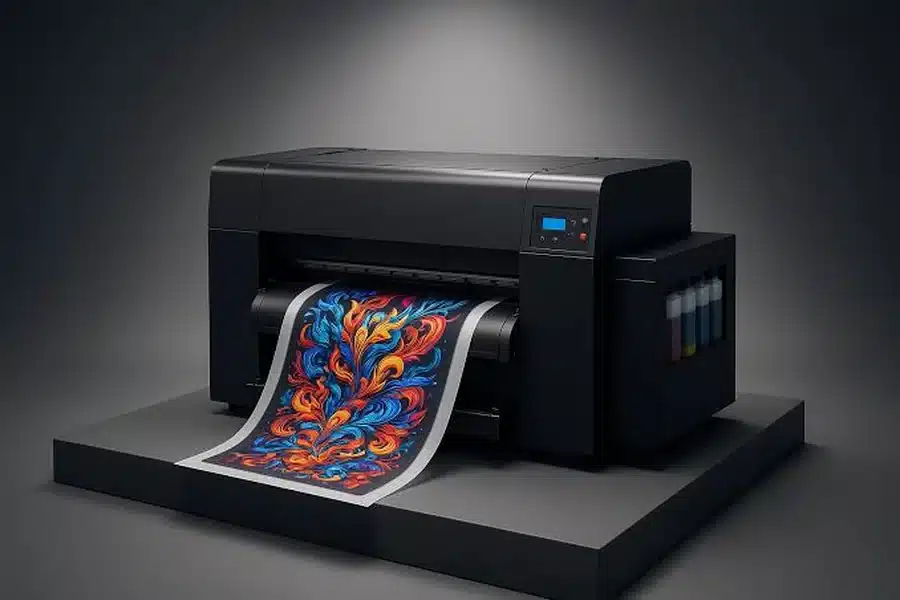
Direct-to-Film printing has become one of the most accessible entry points for small business owners entering the custom apparel market. The equipment has matured, the learning curve has flattened, and the economics now work at volumes that were impractical just two years ago. But the market has expanded fast — and not every machine marketed to small businesses is actually built for them.
Start with Volume, Not Price
The most common mistake small business buyers make is anchoring on purchase price before calculating production volume. A $2,800 machine that clogs every third day costs far more than a $4,500 machine that runs reliably for three years.
Before looking at any specific model, answer this: how many transfers per day will you realistically need in months one through six? Under 30 per day, a compact 13-inch system works. Projecting 50–100 from day one — or with existing order commitments — a production-grade setup is worth the higher upfront cost.
What Actually Matters
Printhead Type
The Epson i3200 is the benchmark for reliable, continuous-use DTF printing. The XP600 is capable but better suited to lighter duty cycles. For a small business running 6–8 hours per day, the i3200 is the safer long-term investment — replacement heads are widely available and the clog rate is significantly lower under sustained use.
White Ink Circulation
White ink settles in idle ink lines overnight. Machines with automatic white ink circulation handle this without daily operator intervention. Machines without it require manual agitation every morning — and inconsistent agitation leads to printhead clogs that cost far more to fix than the price gap between machine tiers.
The Realistic Cost Picture
A small business DTF setup involves more than the printer. Budget for:
- Powder shaker and dryer — non-negotiable for consistent transfer quality
- Heat press — entry-level models start around $400–$600; hydraulic presses offer better pressure consistency for higher volumes
- Ongoing consumables — ink, film, and powder are recurring costs; calculate per-transfer cost at your expected volume
- RIP software — some machines include a license; others don’t
Where to Research Before You Buy
For small business owners comparing specs and real configurations, DTF Bank’s resource on the best DTF printer for small business covers the key decision points — print width, printhead specs, and total system cost — in practical terms that translate directly to production decisions.
The right printer matches your current volume, fits your space, and comes with support you can actually reach when something goes wrong.
