


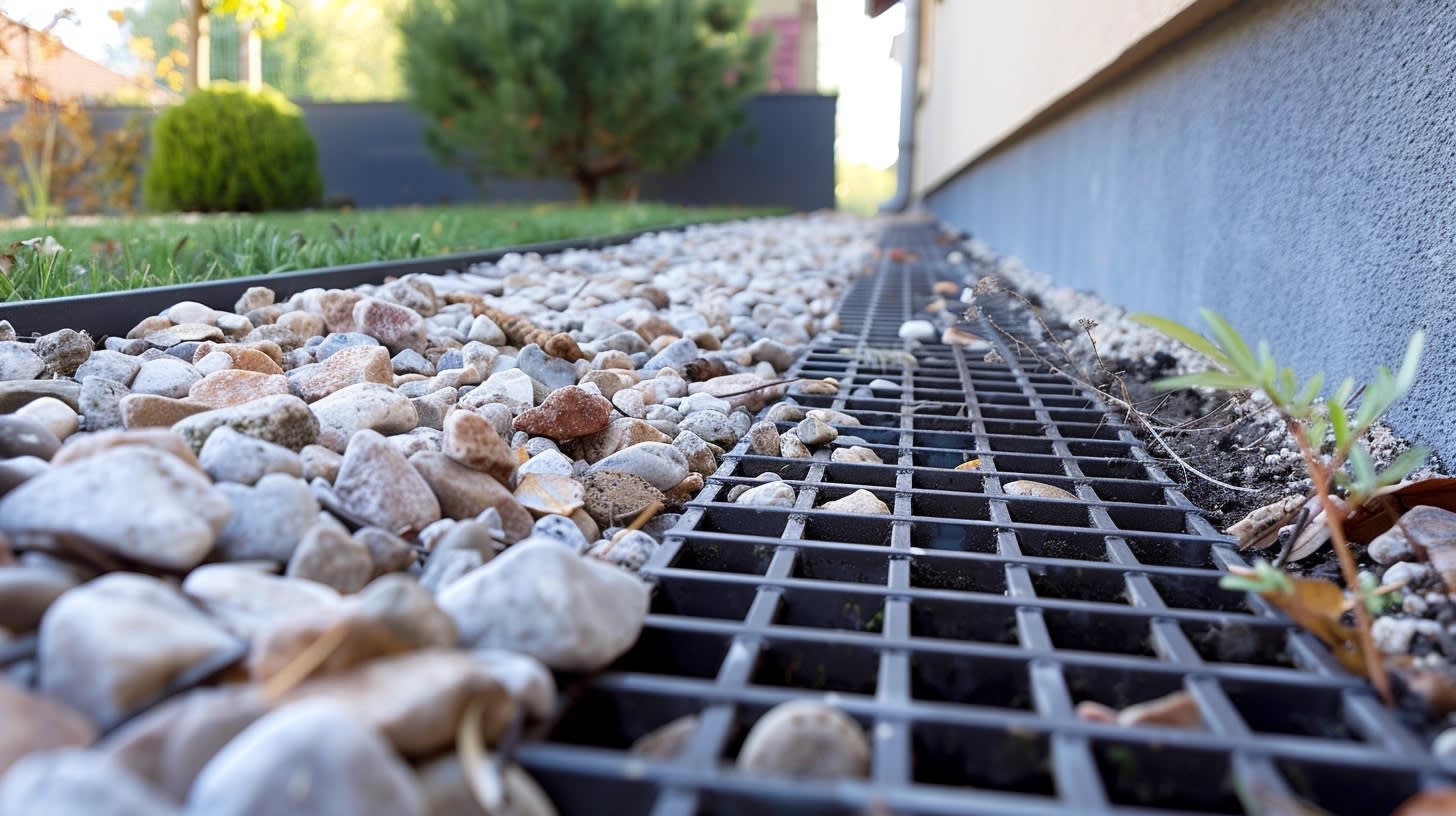
Have you ever noticed water pooling in your yard after a big rain storm? Or maybe parts of your basement sometimes flood when pipes overflow? Excess water can cause big problems. Luckily, there’s an easy DIY solution, French drains.
These handy underground trenches collect extra groundwater and pipe it away from your house or property. In this article, we’ll explore what French drains are, how they work, and easy steps for installing one in your yard.
What is a French Drain?
A French drain is a narrow, shallow trench that’s lined with gravel and perforated pipes to collect standing water and divert it away from your home.
The gravel surrounding the pipes helps filter sediment as the water passes through. Holes in the piping let water seep in, then carry it to a discharge area.
You might also hear them called weeping tile, filter drains or blind drains. But “French drain” is the most common name.
Why Are They Helpful?
French drains provide many useful benefits:
- Keeps basements, foundations and lawns dry by preventing flooding
- Protects against erosion and sinkholes by diverting groundwater
- Improves drainage issues in soggy areas or along slopes
- Reduces pressure on septic systems
- Helps gardens and yards by preventing oversaturation
So if puddles are a problem after storms, a French drain is likely the solution.
How Does a French Drain Work?
French drains use gravity to capture and divert excess water. Here are the steps:
- Water accumulates in the gravel-filled trench surrounding the piping.
- The water seeps through holes in the perforated pipe walls.
- Gravity causes the water to flow down the gentle slope inside the pipe.
- The pipe transports the water away from the drainage problem area.
- Water exits through an outlet into a storm drain, stream, street gutter or vegetated area.
When installed properly on a slight downhill slope, French drains whisk water away with this simple, passive system.
What Are French Drains Made Of?
French drain materials are:
- Gravel or Crushed Stone – Surrounds the pipe to filter water. Pea gravel or 1/2-inch crushed stone work best.
- Perforated Plastic Piping – Lets water enter and moves it downhill. Corrugated or smooth 4-inch plastic pipes work well.
- Landscape Fabric – Lines the trench to prevent dirt from clogging gravel. Use a porous, non-woven geotextile fabric.
- Outlet – End of the drain that dumps water somewhere helpful. Often a storm drain, ditch or wooded area.
Optional materials can enhance effectiveness:
- Catch Basin – An underground box that collects water and feeds the French drain. Helpful for large surface areas.
- Sump Pump – Removes water if gravity alone can’t do the job. Necessary if drainage must go uphill.
- Pop-Up Drainage Emitter – Hidden outlet that pops up when water pressure builds, venting excess. Great for expelling water away from foundations.
- Cleanouts – Vertical pipes allowing access to clear blockages. Should be spaced every 50 feet or less along the pipe.
Helpful Tips for French Drains
Here are some tips to ensure your French drain works as effectively as possible:
- Inspect the area after heavy rains and make sure water is draining fully.
- Flush cleanouts yearly to clear sediment buildup.
- Use enzyme cleaners monthly to keep organic materials from clogging perforations.
- Avoid planting trees, shrubs or dense gardens over the drain trench. Their roots can disrupt function.
- Check that gravel fill remains settled. Add more if trench sinks.
- Ensure the drain outlet area remains clear of debris blockages.
- Cover the trench opening with steel mesh before backfilling to reduce sinking.
- If feasible, choose a downhill outlet point across your property line so the water drains onto acceptable land.
Why “French” Drain?
French drains don’t actually come from France.
One theory is that contractors who first installed perforated pipe drainage systems in the US were French immigrants. The name may be a nod to those early innovators.
Others believe the gravel fill surrounding the pipes resembled French rubble stone walls. Or that the water bubbling from the outlet reminded people of French fountains.
Whatever the origin, French drains are definitely useful inventions we can all be grateful for.
Drainage Solutions for Every Yard
Does your yard turn swampy when storms hit? Do parts of your home or land flood regularly? Don’t tolerate the problems, take back control with French drains. These super handy systems solve all kinds of drainage issues. With some planning and elbow grease, you can install an effective French drain in your yard. Then watch those pesky puddles disappear.
