


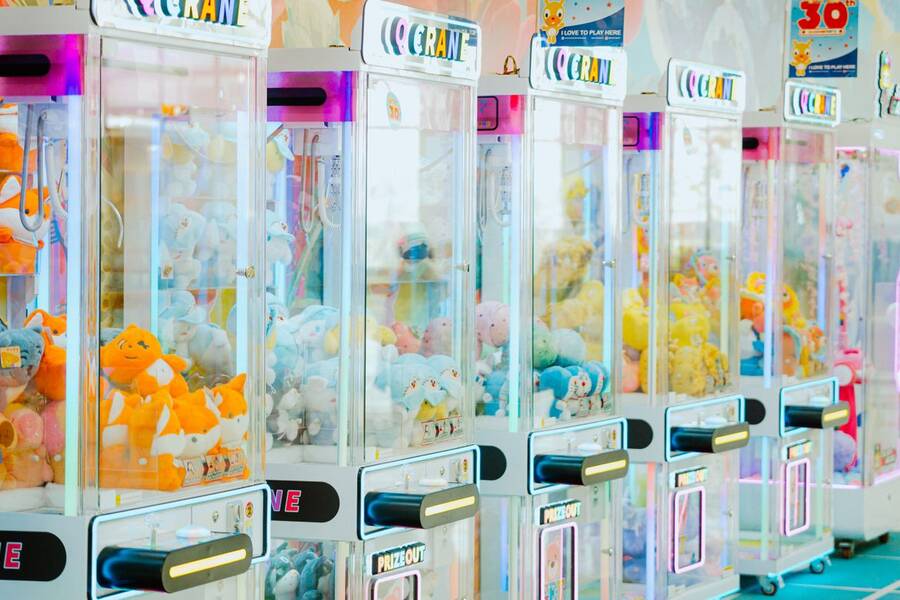
Players decide quickly whether a claw machine deserves another try, and the prize bed shapes that decision. Plush should look appealing through glass, fit the claw, and reward a successful grab without making the game feel impossible. A well-stocked mix supports repeat play and keeps refills practical for operators. Four stocking rules balance visibility, variety, machine fit, and refresh timing, starting with plush that best matches the cabinet and its audience.
Before a large order, operators should check how prize size affects grip, clearance, and the visible fill level. A range of plush mixes for crane machines fits the toy bed and leaves room for the claw to close. Compare item dimensions with the machine’s opening and cabinet clearance, then test representative toys before placing a full order.
1. Match plush size to the machine
Every prize should sit within the claw’s usable range, with enough room for the jaws to close around it. Oversized plush blocks neighboring prizes, while tiny items disappear below larger toys. Operators should compare toy dimensions with the cabinet’s opening, claw width, and prize chute before buying a case.
Size also changes how the bed looks. A mix of similarly sized pieces creates a consistent surface, but two larger plush toys can give players an obvious target. Keep larger pieces reachable, not wedged against the glass or packed tightly beside the prize door.
A quick test grab reveals fit problems before the machine opens for play. Test several sample toys together first to check how the claw closes.
2. Build visible variety
Players scan the prize bed through glass, so recognizable shapes and distinct colors matter. A mix that repeats one silhouette across the full bed looks flat, even when the toys differ in pattern.
Select contrasting forms and colors that remain easy to distinguish under the machine’s lighting. Keep each item visible; don’t bury smaller plush beneath larger pieces. Arrangement carries the variety forward.
Place a few eye-catching pieces near the front, then distribute shapes across the bed so players can see choices from different angles. Avoid a solid wall of one color, which hides the outline of individual prizes.
A staff member should view the display from normal player distance and move items that blend into the background. Check visibility from several player positions around the cabinet.
3. Balance novelty and familiarity
An effective mix encourages players to take a second look while keeping the prize bed feeling intentional. Familiar characters or recognizable animal shapes draw attention, while less expected designs add discovery. Product selection should reflect the venue’s audience and the machine’s setting.
A family arcade, for example, needs a different mix than a small lobby machine with limited space. Seasonal products refresh the cabinet, but timing matters. Add holiday plush early enough for a full play cycle, then replace it when interest fades or the season ends.
Avoid filling every position with a licensed style or single theme; a balanced bed leaves room for different preferences. Track which designs disappear first, and use that observation to guide the next order. Review local play results instead of relying on assumptions about preferences.
4. Refresh before the bed goes stale
Refills work best when operators inspect the machine regularly. Look for empty patches, damaged seams, flattened plush, and prizes caught near the chute. A partly empty bed can make a machine look neglected, while overfilling can limit claw access.
Record the refill date and note which styles sold or were won before adding more. Set a minimum fill level that keeps the prize bed visually complete without crowding the mechanism. During each service visit, remove worn toys, straighten the remaining pieces, and test the claw on a representative prize.
These simple checks keep play consistent and show when the next order should include a different size or style. A simple refill log helps staff repeat decisions across shifts, while notes show whether the same sizes keep leaving the bed first.
Conclusion
Successful stocking starts with a cabinet-specific fit check, then depends on what players can see and reach. Operators should choose varied plush, leave room for the claw to work, and refresh the bed before gaps become obvious. After the next refill, watch which prizes move and test a few grabs during regular service. Use those observations to adjust size, placement, and mix on the next order, rather than repeating a case without checking current play results.
