


If you are running an Amazon business on the side, the math is brutal in a way most “best repricer” articles do not acknowledge. You have a day job, family commitments, or another business that takes most of your hours. Amazon is the side hustle that runs while you are doing everything else. You cannot check the Buy Box at 11pm. You cannot reprice manually at 6am before work. And every minute you spend doing those things is a minute pulled away from sourcing, listings, or the rest of your life.
Most repricers were built for full-time operators who can babysit the dashboard. Part-time sellers need something different: a tool that makes confident decisions without you, recovers when competitors move, and protects your margin even when you have not logged in for three days. Here are the ten worth knowing about in 2026.
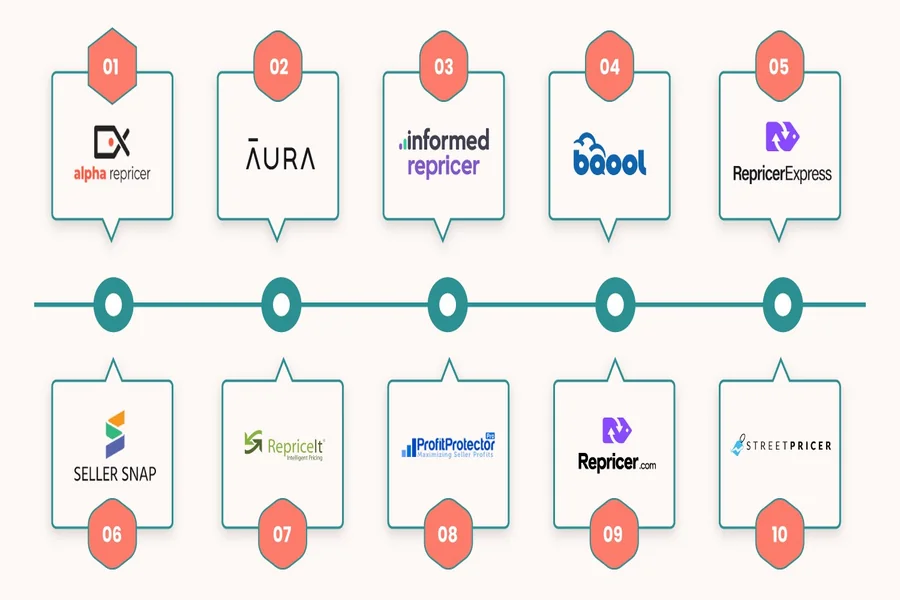
1. Alpha Repricer
Alpha Repricer is the most natural fit for part-time sellers because it removes the two things that usually slow this audience down: complicated setup and constant monitoring. The platform reprices every two minutes with no cap on how many times an ASIN can be repriced, which means your prices stay competitive whether you log in once a week or once a month. The Buy Box Hunter algorithm targets the Buy Box and holds it at the highest profitable price within your set boundaries, with a choice between exclusive ownership or shared rotation between top competitors. You are not picking between aggressive undercutting and losing the Buy Box; the system handles that balance for you.
What makes it work for part-time sellers specifically is the onboarding. Alpha Repricer includes a complimentary onboarding session with the free trial, and the team conducts multiple sessions when sellers need them. Strategies are aligned with your catalog size and experience level rather than thrown at you as a generic setup. Once you are running, the automation prevents common mistakes like aggressive undercutting or chasing every minor competitor movement, which means part-time sellers can step away for days at a time without coming back to a margin disaster. Coverage spans 23 Amazon marketplaces with local-currency display, and the 14-day free trial requires no credit card.
2. Aura
Aura is a popular pick among sellers who want clean, hands-off automation. The Maven AI engine handles strategy logic in the background, leaning toward margin protection rather than chasing the Buy Box at any cost. For part-time sellers, that philosophy fits naturally, you are less likely to come back to your dashboard and find prices have raced to the floor while you were not paying attention. The Hyperdrive feature accelerates repricing on a selected set of listings, with the count varying by plan.
3. Informed Repricer
Informed has been in the repricing space for more than fifteen years and supports both Amazon and Walmart. The platform offers machine learning strategies that work even on listings with no direct competitors, which is useful for part-time sellers whose catalogs often include slower-moving items. Setup is fast, the free trial includes all features, and the flat-fee revenue-based pricing means there are no per-listing caps to manage as your catalog grows.
4. BQool
BQool offers a Conditional Repricing feature that automatically switches strategies based on inventory age or sell-through rate, which is genuinely useful for part-time sellers who cannot manually monitor when a SKU shifts from “fresh” to “aging.” The built-in ROI calculator auto-sets your min and max prices from your target margin, removing one of the most time-consuming setup steps. A 14-day free trial requires no credit card.
5. RepricerExpress
RepricerExpress offers template-based repricing rules, which gives part-time sellers a starting point rather than a blank rule editor. Automation triggers can move SKUs between rules based on sales history, Buy Box performance, sales rank, or stock levels, so your tool can adjust strategy without you logging in to do it. Particularly popular with UK and EU-based sellers.
6. Seller Snap
Seller Snap takes a different angle that works well for part-time sellers: zero rule-writing required. The game theory algorithm watches competitor behavior and uses cooperative pricing logic to avoid race-to-the-bottom price wars. You set min and max, connect Seller Central, and the AI takes over. For sellers who genuinely do not have time to learn rule configuration, this hands-off approach is exactly what fits.
7. RepriceIt
RepriceIt is the simplest tool on this list. It is rule-based with scheduled repricing, you pick up to 20 time slots throughout the day when the tool runs, and FBA and FBM inventory can be repriced separately. The 30-day free trial is the longest in this comparison. For part-time sellers in low-competition categories like books, CDs, or DVDs, this can be all the repricer you need.
8. Profit Protector Pro
Profit Protector Pro is popular with part-time sellers who use BuyBotPro for sourcing. The two tools integrate at the listing page level, so you can set min, max, and repricing strategy directly from the BuyBotPro panel while you analyze a deal. Once your inventory hits FBA, your repricer is already configured. The mobile apps for iOS and Android are genuinely useful when you are managing your business between other commitments.
9. Repricer.com
Repricer.com is multi-channel by design, covering Amazon, eBay, Walmart, and Shopify from one dashboard. Reaction time is within 90 seconds, and Net Margin Repricing on higher tiers factors actual FBA fees and fulfillment costs into your minimum price calculation. A reasonable choice for part-time sellers who already sell across more than one channel and want one tool managing all of them.
10. StreetPricer
StreetPricer supports both Amazon and eBay with no extra per-store fee for multiple seller IDs, which is useful for part-time sellers running parallel small accounts. Brand and tag-based price management lets you group inventory and apply different formulas to each group. The platform’s multi-fulfillment logic means FBA and FBM work together to win the Buy Box rather than competing against each other within your own account.
What Part-Time Sellers Actually Need (and What Marketing Will Try to Sell You)
The Reality of Repricing When You Have a Day Job
Most repricer review articles talk about features. Part-time sellers think about time. So let’s talk about time instead.
It is Sunday night and you have just finished sourcing for the week. You have eight new SKUs to onboard, your daughter has a school project due Tuesday, and you have a 7am meeting Monday morning. The repricer you choose has to fit into that life, not the other way around.
Here is what that actually looks like in practice.
Your repricer should be making the right call at 2pm on Wednesday when you are stuck in a meeting and a competitor drops their price by twelve percent on your best-selling SKU. If you have to be at your dashboard to catch that move, you do not have a repricer, you have a notification system. The tools worth paying for are the ones that hold your margin without you, recover from competitor moves without you, and surface a problem only when there is actually a problem to look at.
Onboarding is the other place part-time sellers get burned. The standard “free 30-minute call” model assumes you have time to absorb everything in one sitting, which you do not. You will forget half of it by Wednesday because you set the tool up on a Saturday morning between errands. The repricers that work for this audience are the ones where you can come back two weeks later with three questions and get answers, not the ones that hand you a setup link and disappear. Alpha Repricer specifically conducts multiple onboarding sessions when sellers need them, which is closer to how part-time learning actually works.
And then there is the floor. The thing that protects you when you cannot check the dashboard for four days because something came up. A repricer that lets you set a minimum price from a formula; your acquisition cost plus shipping plus Amazon fees plus the margin you actually want to make, is doing the quiet protective work that matters more than any flashy AI feature. When you log back in on Sunday, you want to find that nothing has been sold below your real cost. That floor is the difference between a tool you trust and a tool you have to babysit.
What part-time sellers genuinely do not need, despite what marketing pages will tell them: advertising optimization that requires a full-time PPC strategy, enterprise analytics dashboards built for finance teams, brand intelligence layers, or custom integrations with software you do not even use yet. These are tools for the version of your business that exists three or four years from now. Choosing them today is paying for the future at the cost of the present.
Final Thoughts
The best repricer for a part-time seller is the one that disappears into the background and keeps your prices working while you do not. It should not need your attention. It should not require you to learn a new pricing language. It should help you sell consistently across the hours when you cannot be at your dashboard, which for part-time sellers is most hours of the week.
Run the free trial properly. Move a representative sample of your inventory over, set realistic min and max prices, and check back in two weeks rather than two days. If the tool has been making sensible decisions in your absence, you have found the right fit. If you have been pulled back to manual monitoring within the first week, the tool is not working for the way you actually run your business.
