


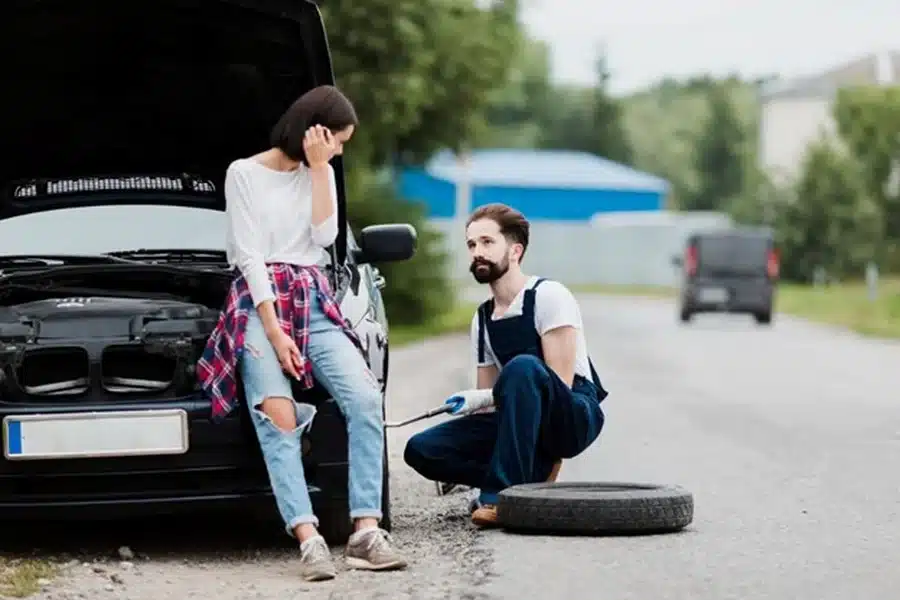
Insurance adjusters quickly determine fault. They use standardized grid-like forms, the police report, and your respective telephone statements. This suffices for a simple two-car crash on a straight, dry road. But when anything else is involved, the invisible fog, for example, or one driver’s wild swerving to avoid another car, three-part results too often don’t mirror reality. The responsivity of hitting that other car can be questioned. Here’s how.
Why the initial finding is just an opinion
While a police report can be compelling evidence at the negotiating table or in front of a judge or jury, it’s not legally binding. A police report can work in your favor or against you. If the report clearly states that the other driver caused the accident, you have a good chance of persuading the insurer to accept liability. But if the report places any amount of blame on you, the insurer might use this as leverage to deny your claim or at least reduce the settlement amount.
Understanding contributory negligence
Even if you have partial fault in a crash, it doesn’t mean you’re not entitled to anything. Fault can be proportioned under negligence law. If an insurer has written to tell you that you are 100% to blame, having that reduced to 30% still has important financial implications for what you can claim.
Apportionment becomes crucial in multi-vehicle crashes. Working out who set a chain reaction in motion and divorcing that from drivers who had no realistic chance of steering clear and escaping the domino effect, demands detailed consideration of the sequence of events, the speeds involved, and the road position. That sort of assessment won’t be delivered during a chat with a claims officer.
Because the details of WA traffic law can be intimidating and arguing with large deep-pocketed insurance corporations isn’t easy, securing the services of an experienced car accidents lawyer perth is the best way to ensure your dispute benefits from professionally constructed legal arguments.
Build a physical evidence file before anything else
The most frequent cause why drivers lose responsibility disputes is because they try to give a subjective explanation. They contact the insurer, tell their side of the story, and hope that will make a difference. Unfortunately, it rarely does.
What really influences a decision is objective, physical evidence. You should start gathering this evidence right after the collision because a lot of it has an expiry date.
Dashcam footage is probably the most powerful tool at an average driver’s disposal. If you have it, make sure you download it that same day. If there was another vehicle in the area that was potentially equipped with a dashcam, also determine that driver’s identity and ask for a copy of the footage. It tends to deteriorate or be overwritten pretty fast.
Event Data Recorders (EDRs), the black box systems in most modern vehicles, record speed, brake application, throttle, and steering in the seconds leading up to a collision. This data can be extracted by a qualified technician and used to directly refute a claim you were driving too fast or hadn’t hit the brakes. GPS logs from your phone or navigation unit can back up your location and speed.
Photograph the scene exhaustively. Skid marks, final resting place of the vehicles, signage, sightlines, and road layout, surface. These all can disappear fast once the vehicles are towed and traffic restarts.
When to bring in an accident reconstruction specialist
Certain collisions are complicated. Is it your fault, or is someone else to blame? You can’t always determine this instantly, because the road layout, the machine, or the weather can directly lead to a crash in non-obvious ways.
There’s a type of expert who studies these things. An accident re-constructionist uses physics and engineering to build a model of what happened and work out if your speed was consistent with avoiding the crash given your actual reaction time and road conditions. They can tell if a hazard was visible at the distance claimed by another driver. Their report is lodged as part of your formal dispute package. It carries far more authority than anything said over the phone.
How to submit a formal dispute
Don’t discuss liability over the phone with a claims adjuster. For claims purposes, such conversations do not establish fault, and any statement could be taken out of context later. Additionally, no recording means no evidence that you can use to dispute the current assessment of responsibility.
Instead, put together a written dispute package and make your challenge official. This has the added benefit of establishing a paper trail against the insurer in later stages of the process. Your written dispute package must include a detailed, chronological account of the accident proving you’re not at fault for the accident, your physical evidence file, any expert reports you’ve obtained, and a letter of demand that conspicuously notes you are contesting the determination to blame you for the crash and lists which aspects of the police report you believe are inaccurate or incomplete. Reference the supporting evidence you’ve attached and also request the specific revision you want in the fault apportionment.
If the insurance company doesn’t reply to your letter in thirty days, or their response lacks substance and fails to go into detail examining your evidence, you have every reason to proceed to a pre-trial conference, which is specifically meant to resolve liability disputes before the matter goes to trial.
