



Crypto payment cards have quietly shifted from a novelty to a genuine financial tool in the wallets of active traders. What started as a fringe concept has matured into a practical strategy for people who want their digital asset portfolios to do more than sit on an exchange. For traders who think about liquidity, rewards, and spending efficiency the same way they think about position sizing, these cards are becoming an increasingly practical fit.
Why Active Traders Are Reaching for Crypto Cards in 2026
The appeal goes beyond convenience. Active traders operate in a world where every dollar has a job, and holding idle crypto while paying everyday expenses with a traditional bank card starts to feel inefficient. The growth in crypto card adoption reflects that shift. Stablecoin spending continues to expand globally as Visa and Mastercard-backed crypto payment solutions become easier to use, especially among users who already manage digital assets daily.
As stablecoins have matured and payment infrastructure has improved, the friction of spending digital assets has dropped significantly. Major exchanges, wallets, and fintech providers now support real-time crypto-to-fiat conversion at checkout, making crypto cards feel far closer to mainstream financial products than experimental tools.
How Crypto Payment Cards Actually Work for Everyday Spending
Most crypto payment cards link a user’s wallet or exchange account directly to a card that runs on traditional payment rails. When you tap or swipe at a merchant, the card pulls from your connected balance and converts the required amount into fiat currency in real time. From the merchant’s perspective, the transaction looks identical to any other card payment, which means acceptance is effectively universal anywhere Visa or Mastercard is supported.
This setup removes the need to manually convert crypto before making a purchase. No logging into an exchange, no waiting for transfers, and no unnecessary delays between holding digital assets and using them in daily life.
How Crypto Converts to Spendable Currency at the Point of Sale
The conversion process happens almost instantly. When a transaction is initiated, the payment system checks the current market rate for the linked cryptocurrency, calculates the equivalent fiat amount required to complete the purchase, and executes the conversion before authorization reaches the merchant.
For traders who hold volatile assets, this real-time conversion can be both useful and something to manage carefully.
Which Model Fits Active Traders Best
Two primary card models dominate the market: debit-style cards that draw directly from funded balances and credit-style cards backed by crypto collateral. For most active traders, debit models provide more control because spending comes directly from assets already allocated for liquidity.
Cards that support multiple assets and stablecoins tend to offer the most flexibility. Traders who maintain balances in USDT, USDC, Bitcoin, or Ethereum benefit from being able to choose which asset funds purchases at checkout.
What to Look for When Choosing the Best Crypto Payment Card as an Active Trader
Choosing the right crypto card requires evaluating more than just advertised cashback percentages. Spending flexibility, conversion fees, supported assets, mobile wallet compatibility, and security features all play a major role.
How the Top Four Crypto Cards Actually Compare
Rates and terms change regularly, so users should always verify current information directly with the issuer before applying.
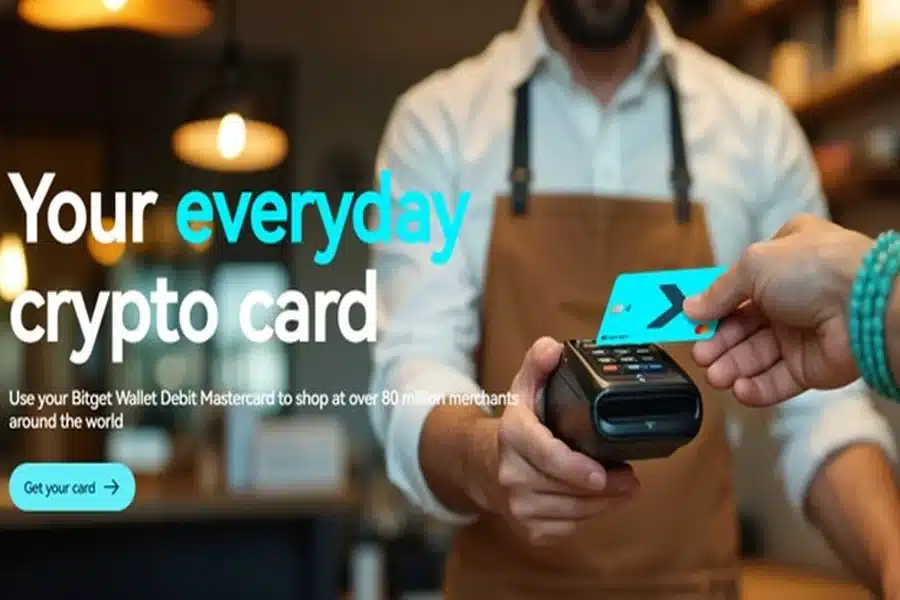
1. Bitget Wallet Card
The Bitget Wallet Card has become one of the more competitive options for active traders looking for practical daily spending flexibility. The card supports real-time crypto spending through the Mastercard network and can be used at millions of merchants globally. It integrates directly with Apple Pay, Google Pay, Alipay, and WeChat Pay, making mobile payments straightforward for users already managing digital assets on the go. The platform also emphasizes low-friction spending with no annual fees, no top-up fees, and support for stablecoins like USDT and USDC, which aligns well with how many active traders already structure their liquidity. For traders prioritizing convenience, global usability, and seamless wallet integration, it stands out as one of the strongest all-around options currently available.
2. Crypto.com Prepaid Visa
It offers tiered cashback structures tied to CRO holdings. Higher cashback rates and premium perks become available at elevated staking tiers, which may appeal to users already active within the Crypto.com ecosystem.
3. Coinbase Card
Coinbase Card remains attractive for users who already keep substantial balances within Coinbase products. Stablecoin spending options can help reduce conversion costs, particularly for users primarily transacting in USDC.
4. Nexo Card
It follows a collateral-backed credit model rather than a direct debit structure. This appeals to traders who want to preserve exposure to long-term holdings while still accessing liquidity through spending.
Growing Mainstream Adoption of Crypto Payment Cards
Recent industry data also suggests that crypto payment cards are steadily becoming part of mainstream digital finance rather than remaining a niche tool for early adopters. According to industry reports citing Dune Analytics data from early 2026, spending volume through Visa-linked crypto cards increased significantly throughout 2025, driven largely by stablecoin usage and everyday consumer payments. The trend reflects how more active traders and digital asset users are beginning to treat crypto cards as practical financial tools for routine spending, travel, subscriptions, and online purchases rather than purely speculative products.
Where Traders Are Using Crypto Cards Daily
Usage patterns look surprisingly similar to traditional spending habits, just funded differently. Groceries, fuel, subscriptions, online shopping, travel expenses, and software payments remain the most common categories.
The difference is in how traders approach funding those purchases. Many prefer to use stablecoins for day-to-day spending while keeping long-term crypto positions intact. That approach allows them to maintain market exposure while still accessing portfolio liquidity when needed.
Travel remains one of the strongest use cases. Traders who already hold stablecoins often use crypto payment cards internationally to simplify foreign purchases, reduce conversion friction, and avoid relying entirely on traditional banking systems while moving between countries.
How Active Traders Maximize Rewards and Cashback
Rewards remain one of the strongest reasons why the best crypto payment card options continue attracting active traders. Users who already think in terms of percentages, spreads, and optimization naturally compare reward structures the same way they compare trading fees or funding rates.
The differences become meaningful over time. A trader spending a few thousand dollars per month through a crypto payment card can accumulate a meaningful amount of cashback annually, particularly if rewards are paid in Bitcoin or stablecoins rather than platform-specific tokens.
The type of crypto rewarded also matters. Some cards promote higher headline percentages through native ecosystem tokens, while others focus on more stable reward structures tied to Bitcoin or stablecoins. Traders who prioritize long-term flexibility often pay closer attention to the actual value of the reward rather than the advertised percentage alone.
Tier Systems and How Traders Unlock Better Rates
Tiered reward systems are common across major crypto card providers. Many programs offer improved cashback rates, fee reductions, or premium perks to users who maintain balances within the ecosystem.
Active traders are often the users most willing to meet these thresholds because they already hold significant digital asset positions. Priority customer support, travel-related benefits, and reduced foreign transaction fees can become valuable additions for users who regularly move funds across platforms and regions.
Using Crypto Cards as a Portfolio Liquidity Strategy
Beyond rewards, crypto payment cards serve a more strategic purpose: they allow traders to access portfolio liquidity for everyday expenses without constantly transferring funds between accounts.
In practice, many experienced traders prefer to maintain dedicated stablecoin balances specifically for card spending. Stablecoins reduce short-term volatility exposure at checkout and simplify budgeting while preserving longer-term positions in assets like Bitcoin or Ethereum.
During periods of market volatility, this approach becomes even more useful. Traders with stablecoin-funded card balances can continue covering routine expenses without selling volatile holdings during unfavorable market conditions.
Some traders also use crypto cards alongside periodic profit-taking strategies. Instead of making large withdrawals all at once, they gradually convert portions of trading gains into stablecoins that later fund everyday spending.
Tax Implications Traders Need to Know Before Swiping
Tax treatment remains one of the most important considerations for crypto card users. In many jurisdictions, cryptocurrency is treated as property for tax purposes, which means spending crypto can trigger a taxable event.
Each transaction involving crypto-to-fiat conversion may technically represent a disposal of the underlying asset. If that asset appreciated after acquisition, the user could realize a capital gain.
This is one reason many active traders prefer spending stablecoins rather than volatile cryptocurrencies directly. Stablecoins generally reduce the size of potential gains or losses attached to daily transactions, even though reporting requirements can still apply depending on local regulations.
The most practical solution for many users is crypto-focused tax software that imports transactions directly from exchanges, wallets, and payment card providers. Traders who maintain organized transaction records throughout the year usually avoid significant issues during tax season.
Fee Structures and Security Considerations
Fees have a direct impact on the real value of any crypto card reward system. Conversion spreads, ATM withdrawal costs, inactivity fees, and foreign transaction charges can quietly reduce the practical benefit of cashback rewards if users are not paying attention.
Security is equally important for active traders who regularly move significant value through exchanges and wallets. Features such as two-factor authentication, instant freeze functionality, virtual cards for online purchases, and detailed transaction controls provide meaningful additional protection.
Turning Your Portfolio Into Daily Purchasing Power: Is It Worth It?
For the right type of trader, crypto payment cards can provide a practical bridge between portfolio holdings and daily spending. They simplify access to liquidity, reduce friction between crypto and traditional commerce, and allow users to integrate digital assets into everyday financial routines.
The trade-offs still matter. Tax reporting becomes more important, fee structures require careful review, and spending directly from volatile assets without a stablecoin buffer can introduce unnecessary exposure.
Traders who approach these cards strategically usually gain the most value. Using stablecoins for routine purchases, tracking transactions carefully, and selecting a provider with transparent fees and strong payment infrastructure tends to create the best overall experience.
For traders already operating with a portfolio mindset, adding a well-structured crypto payment card increasingly feels less like an experiment and more like a natural extension of modern digital finance.
