


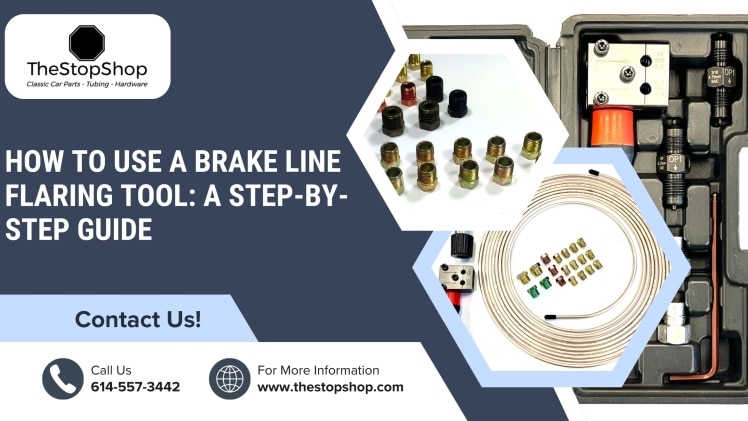
When working on brake systems or fuel lines, knowing how to use a brake line flaring tool is essential. A properly flared brake line ensures a leak-proof connection between the brake line tubing and fittings. This guide will walk you through using a brake line flaring tool, helping you create strong and secure connections for brake and fuel line tubing.
Tools and Materials You’ll Need
To flare a brake line, you will need several tools and materials:
- Brake line flaring tool: The main tool used to create the flare on the brake line tubing.
- Brake line tubing: Usually made of steel, copper-nickel, or stainless steel.
- Brake line fittings: These connect the brake line to other components in the braking system.
- Inverted flare fittings: Used for most brake systems, providing a secure connection.
- Tube cutter: To cut the brake line tubing to the appropriate length.
- Deburring tool: Used to remove sharp edges from the cut tubing.
- Brake line clips: These secure the brake lines to the vehicle chassis.
- Fuel line tubing (optional): If you’re working with both brake and fuel lines, the process is similar for both.
Step-by-Step Guide to Using a Brake Line Flaring Tool
Now that you know the importance of flaring brake lines, let’s go through the steps for using a brake line flaring tool.
Step 1: Cut the Brake Line Tubing to Length
Start by cutting the brake line tubing to the desired length. Use a tube cutter for this step to ensure a clean, square cut. As you rotate the cutter around the tube, gradually tighten the cutting wheel until the tubing is cut through. Make sure the cut is smooth and even, as uneven cuts can lead to improper flares.
Step 2: Deburr the Tubing
Once the tubing is cut, you need to remove any burrs or sharp edges from the inside and outside of the tubing. Burrs can interfere with the flaring process, leading to a weak or uneven flare. Use a deburring tool to clean up the edges, ensuring that the tubing is smooth and ready for flaring.
Step 3: Place the Fitting on the Tubing
Before creating the flare, slide the brake line fittings onto the tubing. It’s crucial to do this now because once the flare is created, the fitting cannot be placed on the tubing. Make sure the fitting is oriented correctly, with the threaded end facing the direction it will be attached.
Step 4: Secure the Tubing in the Flaring Tool
Place the tubing in the brake line flaring tool’s clamp. The end of the tubing should protrude slightly from the clamp, matching the depth gauge that comes with the flaring tool. Ensure the tubing is aligned correctly and is securely clamped in place.
Step 5: Create the Inverted Flare
The next step is to create the flare. If you’re making an inverted flare (most common for brake lines), insert the correct die for the tubing size into the tool. Begin by forming the first flare, which creates a bell-shaped end on the tubing. Once this is done, tighten the flaring tool further to press the bell into the tubing, forming the inverted flare. This two-step process is critical for making a strong, durable flare that can handle the high pressures in brake systems.
Step 6: Inspect the Flare
After the flare is created, inspect it to ensure it’s smooth and uniform. A properly formed inverted flare should have no cracks, irregularities, or deformities. The flare should sit flush against the brake line fitting when connected.
Step 7: Attach the Brake Line Fittings
Once the flare is complete, you can attach the brake line fitting to the flared end of the tubing. Tighten the fitting securely, making sure the flare sits properly inside the fitting.
Step 8: Install the Brake Line and Secure with Brake Line Clips
With the flare completed and the fitting attached, you can now install the brake line tubing on the vehicle. Use brake line clips to secure the tubing to the vehicle’s chassis, preventing it from moving or rattling during operation.
Common Mistakes to Avoid
When using a brake line flaring tool, there are a few common mistakes to watch out for:
Forgetting to add the fitting before flaring: Always remember to slide the fitting onto the tubing before creating the flare.
Overtightening the flare: Avoid overtightening the flaring tool, as this can lead to cracks in the flare.
Using the wrong size die: Ensure you’re using the correct die size for the tubing you’re working with.
Conclusion
Using a brake line flaring tool is a critical skill for anyone working on brake or fuel line systems. By following these steps, you can create secure, leak-proof connections that will keep your vehicle safe and reliable. Whether working with brake line tubing or fuel line tubing, mastering the use of a flaring tool will make your automotive projects more professional and efficient.
